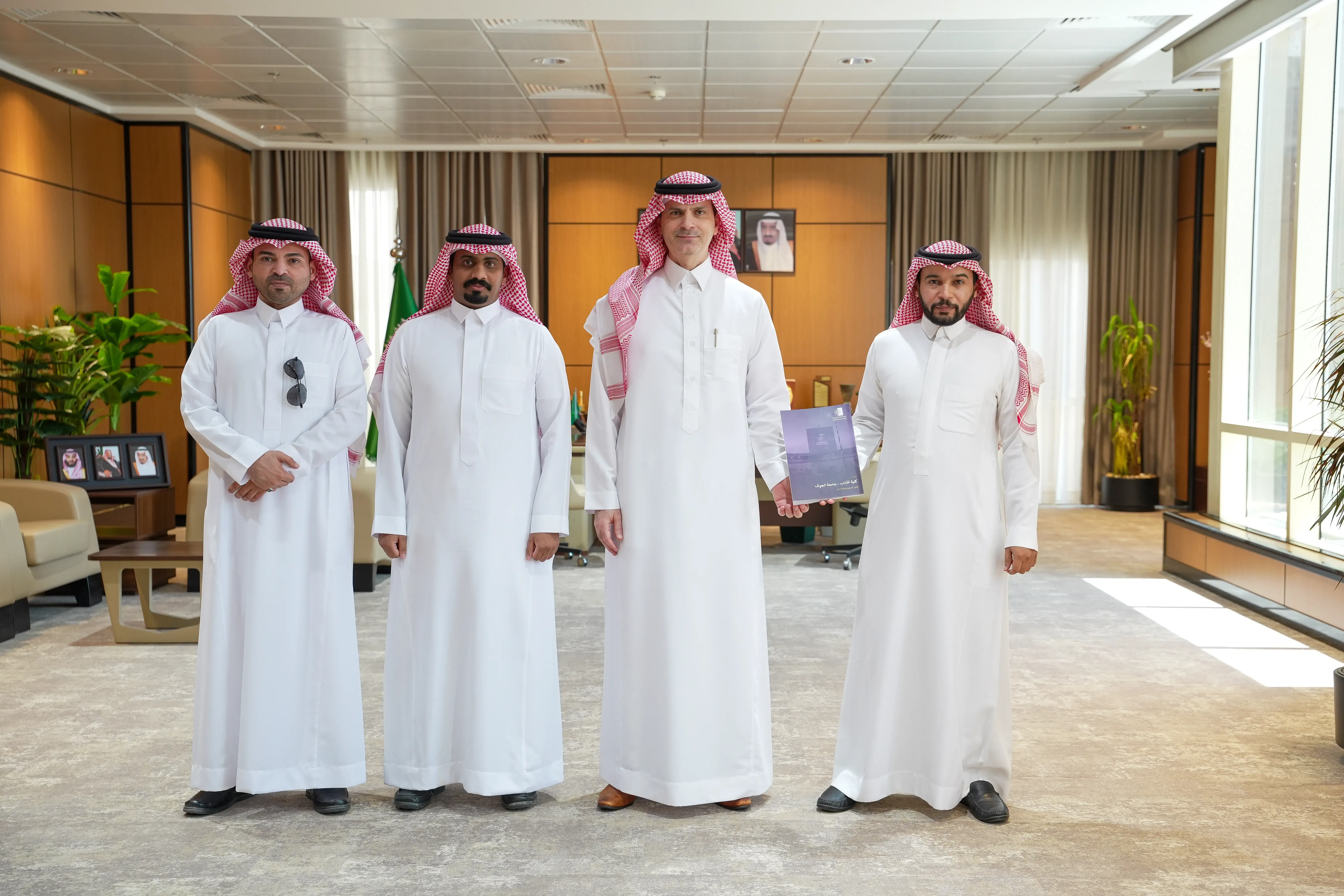
Jouf University President Prof. Mohammed bin Abdullah Al-Shaya Reviews the College of Arts Annual Report and Its Achievements and Future Targets
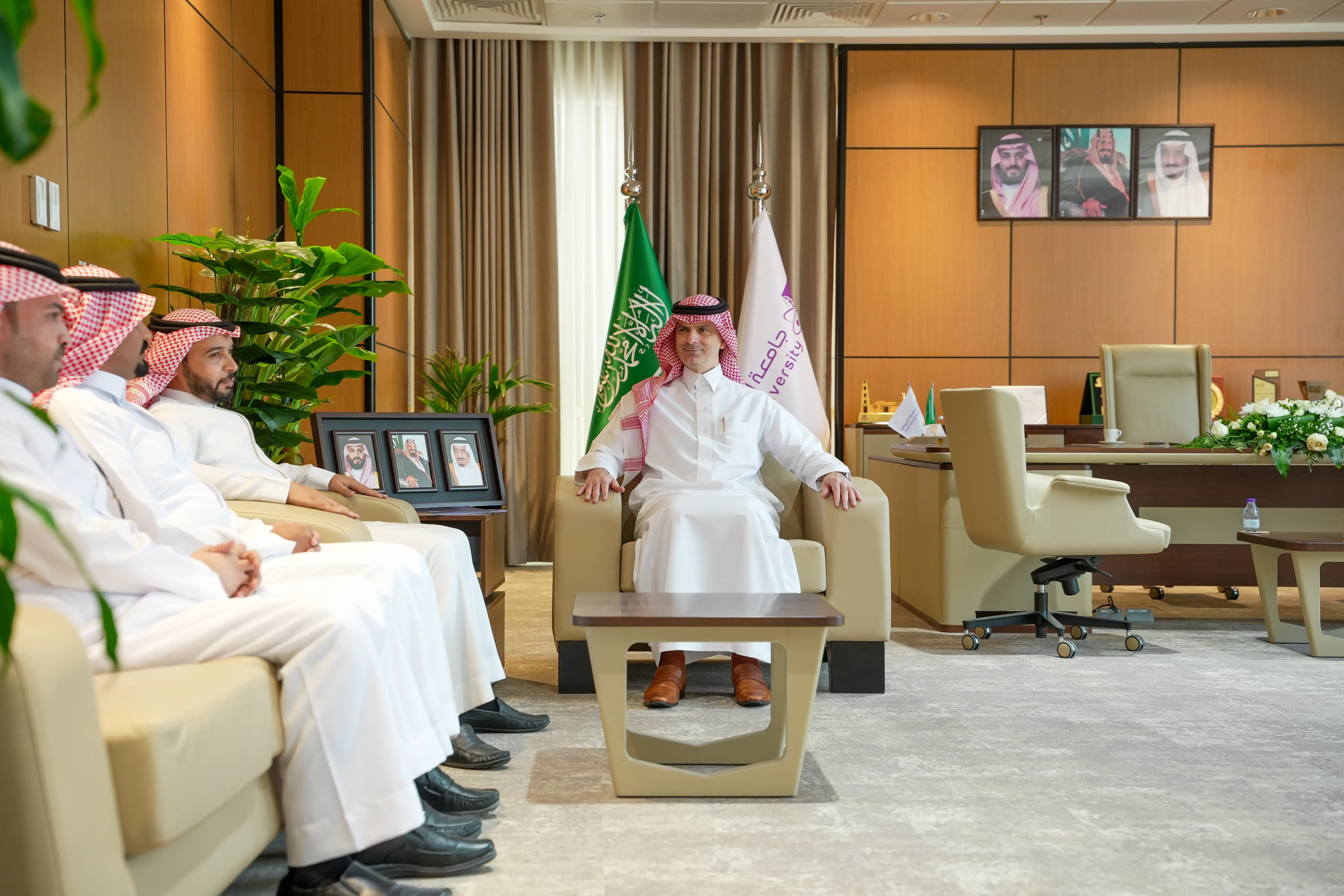
The President of Jouf University, Prof. Mohammed bin Abdullah Al-Shaya, received the Dean of the College of Arts, Dr. Abdulhamid bin Mahtalis Al-Anazi, and the College Vice Deans. During the meeting, the College’s annual report for the 1447 AH academic year was reviewed, highlighting key performance indicators and academic, research, student, and community achievements, as well as progress in quality enhancement, program development, alignment of learning outcomes with labor market needs, and the College’s key targets and development plans for the coming period.
Prof. Al-Shaya reviewed the College’s progress throughout the academic year and its accomplishments within strategic areas focused on quality and excellence, program alignment with labor market needs, support for scientific research, and the strengthening of partnerships and social responsibility. These efforts contribute to enhancing the College’s role in delivering high-quality educational and research outcomes in the fields of arts, languages, and sports sciences, while supporting the University’s objectives and the goals of Saudi Vision 2030.
The report indicated that the College of Arts comprises three active academic departments: Arabic Language, English Language, and Sports Sciences and Physical Activity. It also includes several specialized units, including the Arabic Language Teaching Unit for Non-Native Speakers, which contributes to preparing international students and developing their Arabic language proficiency to enable them to continue their university studies. During the year, the College enrolled 486 male and female students and graduated 174 students. The College also offers two accredited undergraduate programs, in addition to two postgraduate programs.
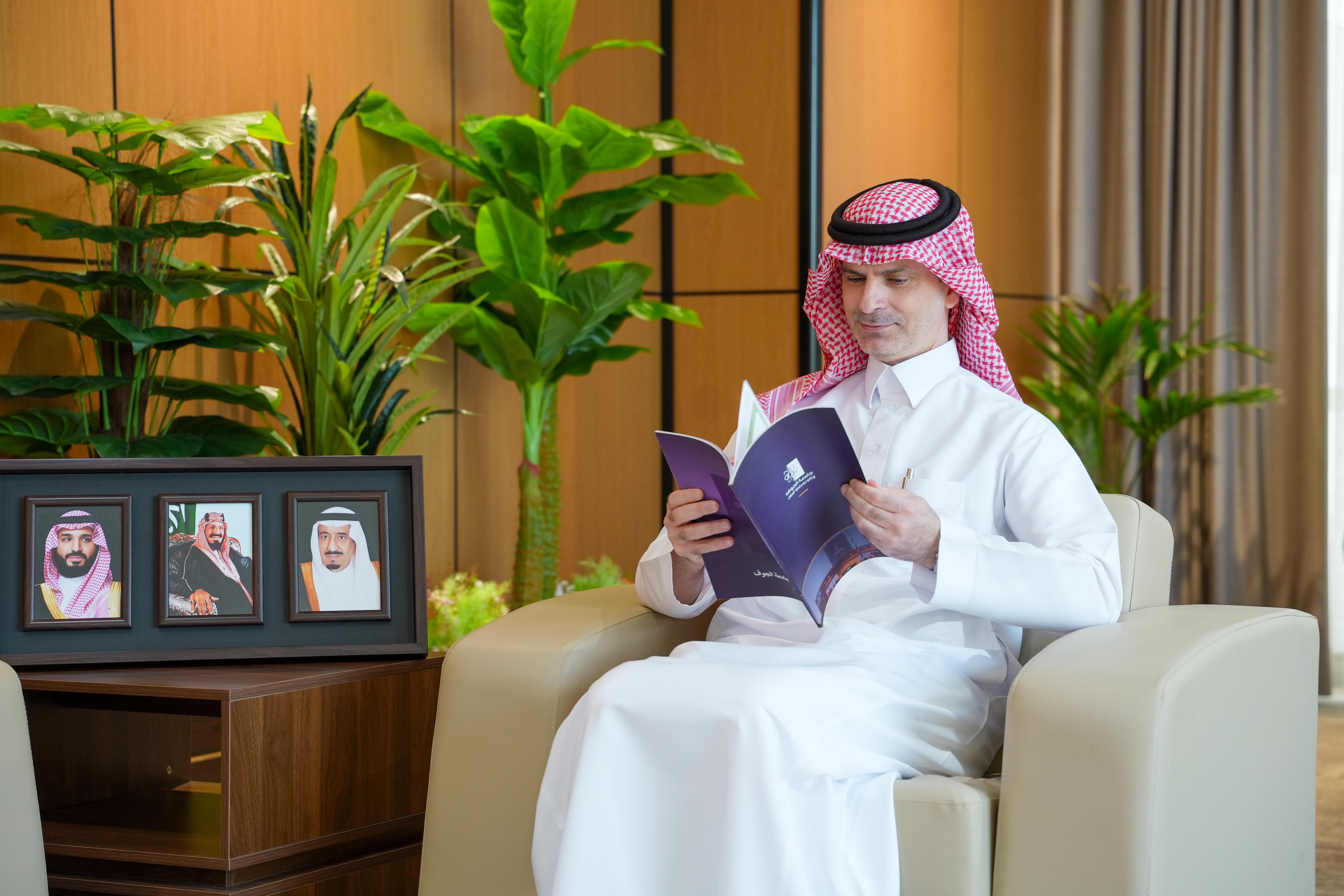
In scientific research, the report highlighted the College’s research output, including 18 papers indexed in Web of Science and Scopus, 15 papers indexed in ARCIF, and 176 scientific citations. The University President also reviewed the College’s efforts to develop students’ skills and enhance their professional readiness through training programs, professional and achievement-test preparation sessions, and other capacity-building initiatives. The College delivered 18 training courses benefiting 361 male and female students, in addition to 16 training sessions dedicated to readiness assessments, as well as professional certification programs and development initiatives for faculty members and College staff.
Student excellence featured prominently in the report, with College students receiving nine awards across scientific, cultural, and volunteer fields. These included first place in the Scientific Research category, Humanities and Social Sciences track at the undergraduate level, during the 15th Scientific Forum, as well as first place in the Short Story track and first place in a volunteer hackathon held in the Al-Jouf Region. These achievements reflect the diversity of areas in which the College’s students continue to excel.
In community service and volunteering, the College recorded strong engagement through 131 volunteer opportunities involving 710 male and female volunteers, who collectively contributed 5,598 volunteer hours, in addition to implementing a variety of community activities and initiatives. Performance indicators showed that beneficiary satisfaction with community services reached 4.6 out of 5, while the percentage of College students participating in community activities exceeded the established target.
The meeting also reviewed the College’s efforts to expand partnerships and serve the local community, including a memorandum of understanding with King Abdulaziz Specialist Hospital in Al-Jouf. The College is also working to develop high-quality opportunities in education, training, and consultancy, including English language programs, international language examinations, proofreading, academic review, and translation services, thereby maximizing the use of the College’s expertise and specializations in serving both the University and the wider community.
The report further outlined the College’s targets for 1448 AH, which focus on continuing program development, improving graduate outcomes, and increasing research productivity. Key targets include reaching 40 papers indexed in Scopus and ISI, increasing the percentage of faculty members publishing scientific research to 95%, raising the number of published student research papers to eight, delivering 22 community programs and initiatives, and improving graduates’ pass rates in professional and achievement examinations.
Prof. Mohammed bin Abdullah Al-Shaya emphasized that the value of academic programs is measured by their ability to generate high-quality knowledge, develop students’ skills, prepare them to compete effectively in the labor market, and transform knowledge into meaningful impact that extends to the wider community. He stressed the importance of continuing to develop the College’s programs based on clear performance indicators, strengthening quality and academic accreditation, advancing scientific research, and expanding opportunities for students to participate in research, innovation, and high-impact activities.
He also highlighted the importance of capitalizing on the College of Arts’ academic and disciplinary diversity, strengthening the connection between its programs and evolving labor market trends, and expanding its presence in the fields of languages, humanities, and sports sciences. He further emphasized the importance of developing community and professional partnerships that provide students and graduates with broader opportunities for learning, training, and practical experience, affirming that students remain at the heart of the educational process and the primary focus of all development and improvement plans.
For his part, the Dean of the College of Arts, Dr. Abdulhamid bin Mahtalis Al-Anazi, expressed his appreciation for the University President’s continued support and follow-up of the College’s progress. He noted that the achievements recorded during the year were the result of the integrated efforts of the College’s faculty and staff and their commitment to teamwork. He affirmed that the College will continue developing its academic and research programs, enhancing the quality of its outcomes, supporting student excellence, and expanding its community impact in line with its strategic