


Jouf University President Launches Phase Two of the “Professional Volunteering” Initiative: From Impact to Sustainability and Toward an Institutional Model That Extends the University’s Expertise to the Community
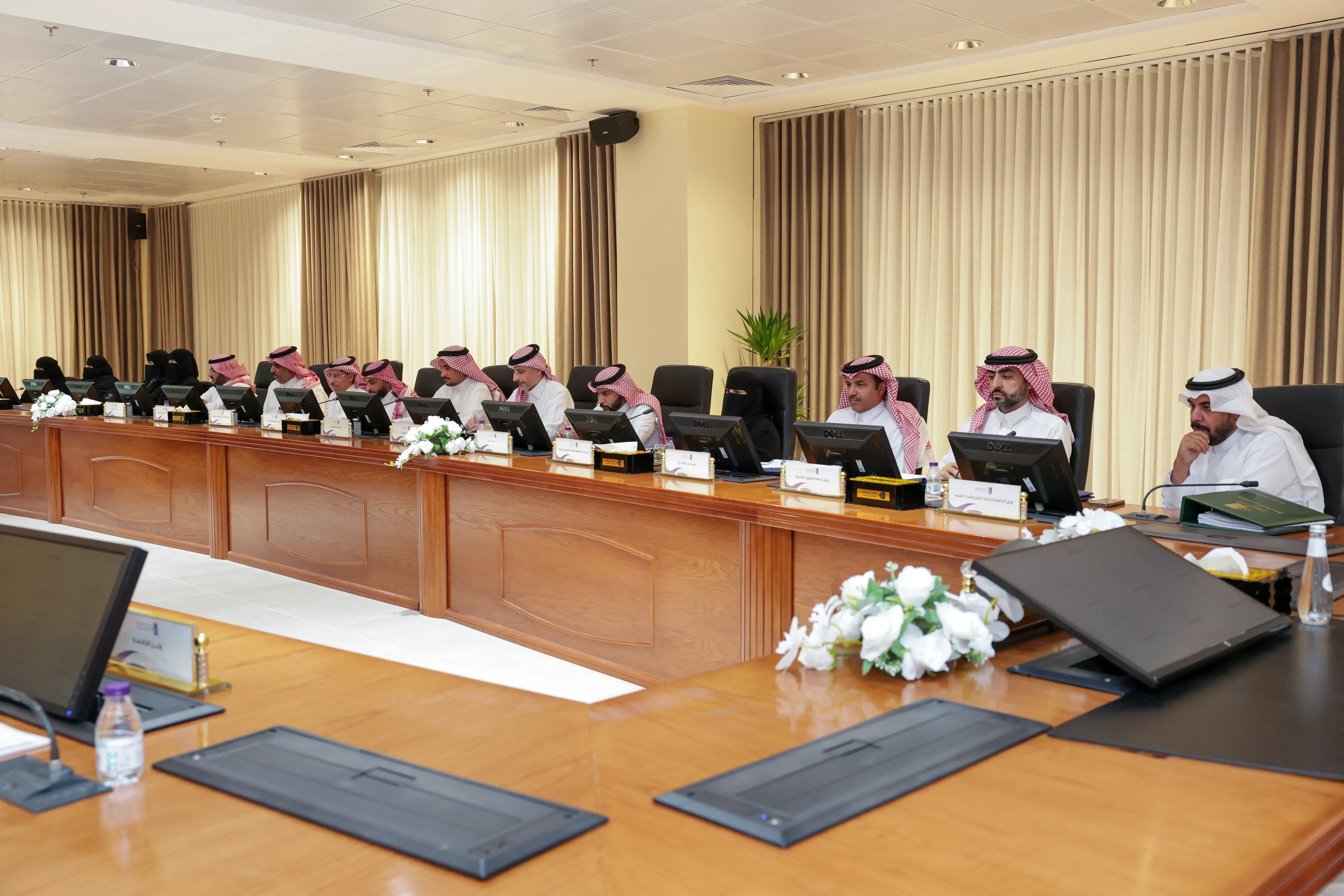
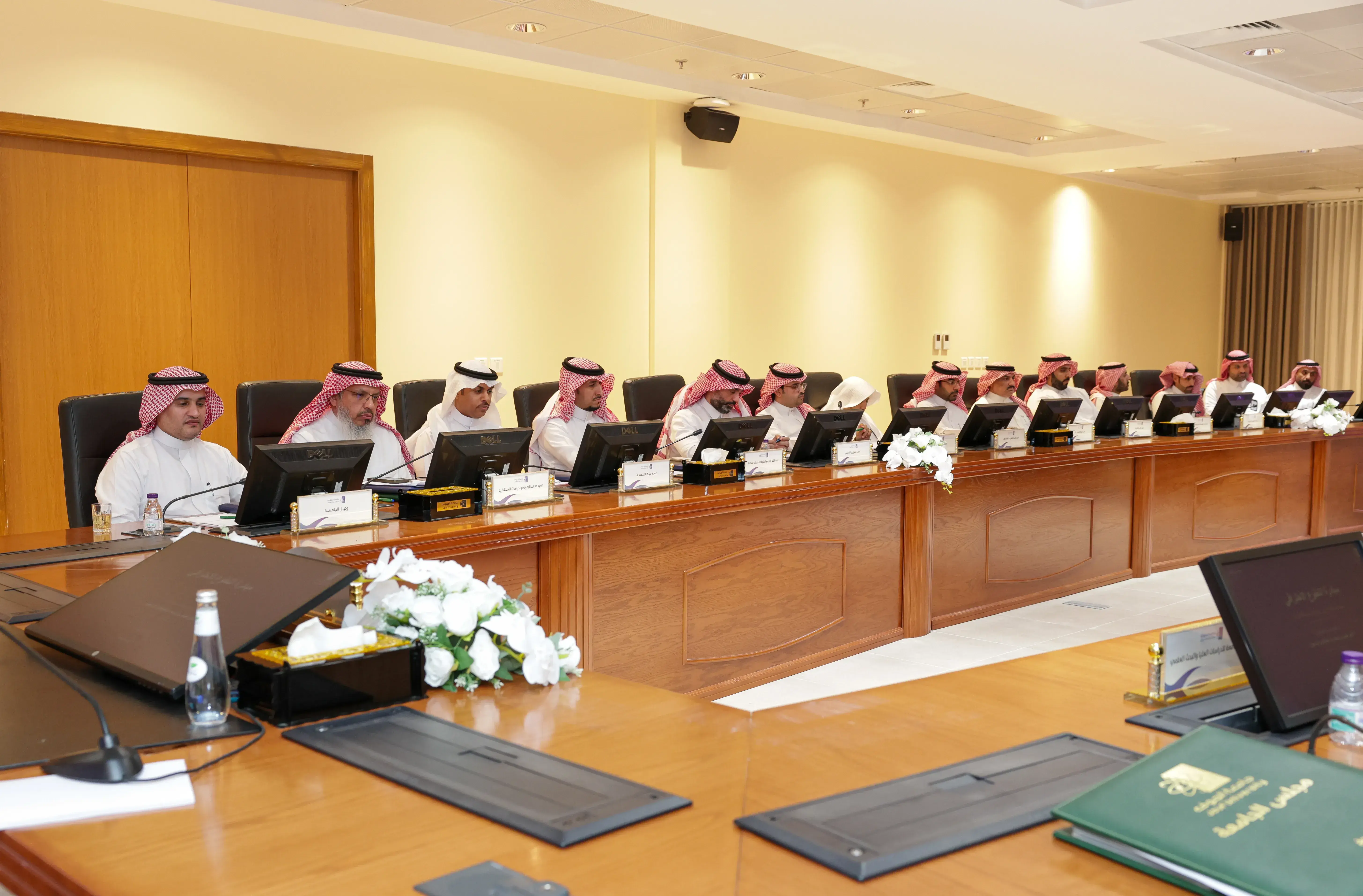
Jouf University President, Prof. Mohammed bin Abdullah Al-Shaya, launched the second phase of the “Professional Volunteering” Initiative, in the presence of the University Vice Presidents, members of the University Council, and staff of the Deanship of Student Affairs. Implemented by the University through the Deanship of Student Affairs under the theme “From Impact to Sustainability,” the initiative comes in response to the directives of His Royal Highness Prince Faisal bin Nawaf bin Abdulaziz Al Saud, Governor of Al-Jouf Region, and builds on the notable outcomes achieved during its first phase in harnessing the expertise of University leaders and specialists to serve students, graduates, community members, and nonprofit organizations across the region.
The second phase represents a significant evolution in the initiative’s journey, moving beyond the delivery of specialized professional volunteering activities toward the establishment of a sustainable institutional ecosystem for managing professional volunteering, measuring its impact, expanding its reach, and developing a model that can be replicated elsewhere. The phase comprises seven projects organized under three main packages: Deepening Impact, Building Sustainability, and Institutional Excellence.
The initiative is based on the Professional Volunteering Framework issued by the National Center for Non-Profit Sector, as well as national guidelines and regulations governing volunteer work. Its concept centers on University leaders and experts providing voluntary advisory sessions, professional solutions, and specialized expertise to students, graduates, members of the community, and nonprofit organizations, thereby transforming academic knowledge and professional expertise into added value and direct developmental impact.
Prof. Al-Shaya emphasized that the launch of the second phase reflects the University’s commitment to maximizing the impact of its expertise and national capabilities, embedding a model of volunteering rooted in specialization and knowledge, and advancing professional volunteering from individual initiatives and events into a sustainable institutional system that empowers both the community and the nonprofit sector while delivering measurable and enduring professional solutions.
He noted that the University views volunteering as an important pathway for creating meaningful social impact, while professional volunteering adds a qualitative dimension by leveraging the specialized knowledge and professional experience of members of the University community to address the genuine needs of organizations and individuals.
He further explained that the next phase seeks to move from service delivery to capacity building, from one-off activities to extended empowerment pathways, and from measuring activities to measuring impact and sustainability.
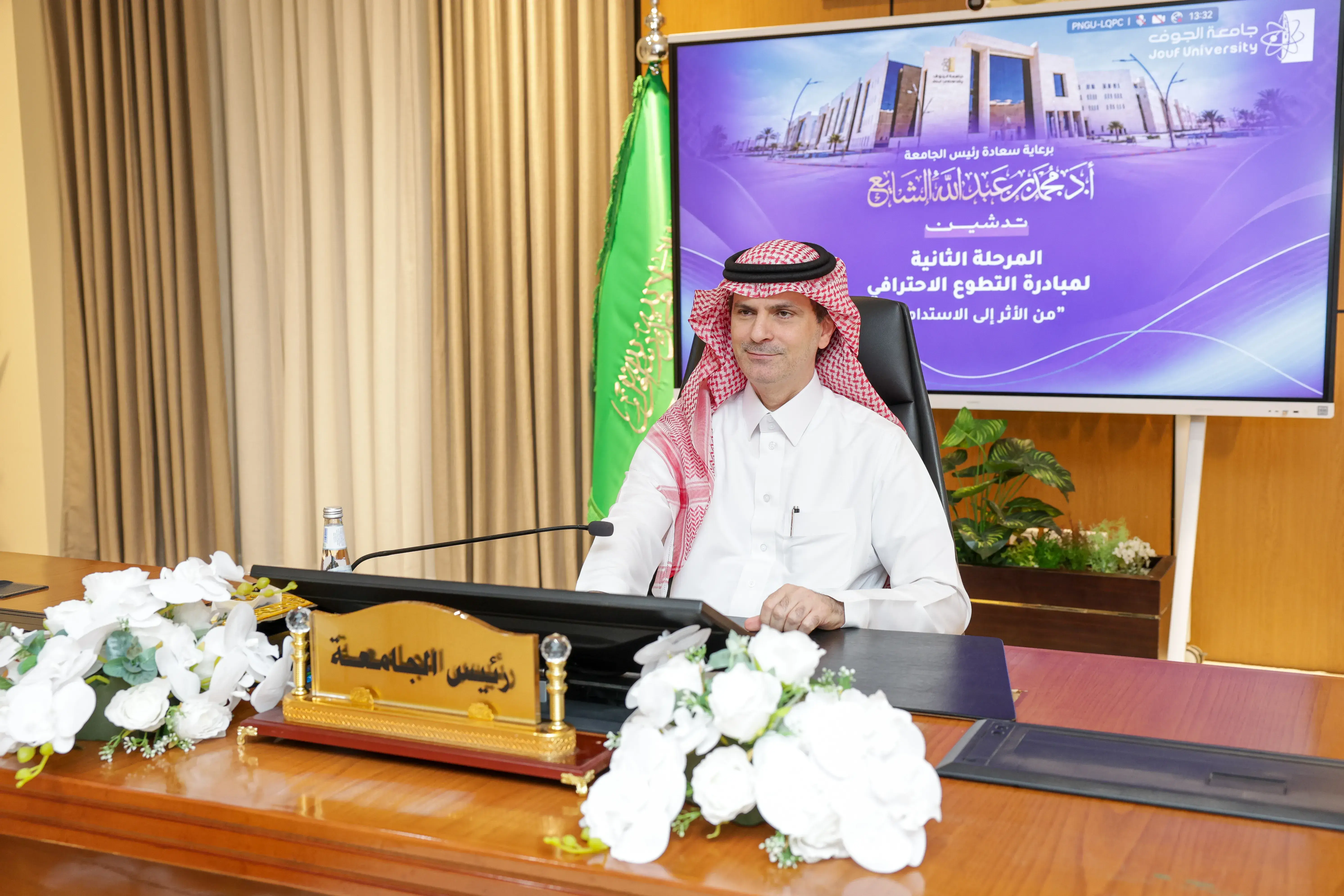

Prof. Al-Shaya added that the achievements of the first phase provide a strong foundation for further development and expansion. He stressed that the second phase is not merely intended to increase numerical outputs, but rather to establish an integrated institutional model that ensures the sustainability of outcomes, creates a pool of professional volunteers and experts, develops a digital impact-measurement ecosystem, and enables beneficiary organizations to retain tools and solutions whose benefits continue beyond the completion of individual programs.
The launch of the second phase follows the strong outcomes of the first phase, which ran from December 23, 2025, to September 1, 2026, encompassing 252 days of documented work. During this period, the initiative delivered 99 activities benefiting 2,387 documented beneficiaries, achieving a satisfaction rate of 96.7%.
A total of 70 professional volunteers, comprising University leaders and experts, contributed 7,472 documented volunteer hours. The initiative also supported 19 nonprofit organizations and achieved full coverage of all 22 nationally approved professional fields.
The first phase was characterized by a diverse range of professional pathways. Activities were distributed across nine tracks, including human capacity development, health and medical services, technical and digital fields, scientific research, sustainability, institutional development, financial resources, services for pilgrims and visitors to the Holy Sites, and other supporting professional fields. This diversity enabled the initiative to respond to a broad spectrum of beneficiary and organizational needs.
The beneficiary base included 843 students and graduates, 937 community members and employees of beneficiary organizations, and 607 University affiliates, creating a balanced approach between strengthening the capabilities of the University community and transferring expertise to external organizations and society at large.
During its first phase, the initiative adopted a structured methodology beginning with awareness and knowledge dissemination, followed by training, and ultimately progressing to institutional empowerment.
A total of 69 advisory sessions were delivered to promote awareness, benefiting 1,873 participants, alongside five training sessions and workshops for 129 trainees, and 25 institutional empowerment workshops and sessions benefiting 385 participants.
The institutional empowerment track alone generated direct impact across 19 nonprofit organizations through 25 specialized workshops and sessions and 250 documented hours of professional volunteering. Beneficiary organizations recorded an average satisfaction score of 4.7 out of 5, reflecting the quality and relevance of the professional services delivered.
Pre- and post-assessment results from the first phase demonstrated significant improvement in beneficiaries’ knowledge, skills, and practical application. The overall average improvement reached 86.7%, while participants in the training program recorded an improvement of 126%, based on a documented sample and approved measurement tools used within the initiative.
A follow-up assessment conducted after 90 days showed that 78% of respondents had applied what they learned in practice, while 69% continued to use the knowledge and tools they had acquired. For 58% of respondents, implementation resulted in a measurable improvement in a performance indicator. Documented institutional changes were also identified in six beneficiary organizations.
The initiative translated these outcomes into practical institutional deliverables, including a data dashboard incorporating 12 decision-support indicators, an empowerment plan for persons with disabilities, a draft governance guide containing nine policies, a safety plan and risk matrix, and three draft research papers suitable for publication in peer-reviewed journals.
These outputs reflect the initiative’s philosophy of professional volunteering as a means of producing specialized, practical deliverables that can be utilized and sustained beyond the immediate volunteering activity.
The second phase is built around three major transformations. The first is a shift from standalone professional activities to extended empowerment pathways that culminate in institutional deliverables supported by regular follow-up. The second is a shift from experts contributing individually toward establishing an organized Expertise Bank and a structured program for preparing certified professional volunteers. The third is the advancement of impact measurement from manual processes and retrospective reporting to an integrated digital ecosystem featuring a real-time impact dashboard and a published annual report.
The second phase will establish four sustainable institutional assets, including 10 extended empowerment pathways, an Expertise Bank comprising 150 experts classified across 22 professional fields, and the qualification of 75 certified professional volunteers through three training cohorts.
It will also establish an integrated digital ecosystem featuring standardized electronic forms and a real-time impact dashboard.
The concept of “Extended Empowerment Pathways” is designed to move beyond the traditional one-off workshop toward a comprehensive development journey for beneficiary organizations. Each journey begins with a needs assessment, followed by the provision of three interconnected services within a single development pathway, ultimately resulting in a permanent institutional output such as an approved policy, governance guide, operational plan, or decision-support dashboard.
This is followed by impact measurement and quarterly follow-up to verify the sustainability of the resulting output. The pathway aims to comprehensively empower 10 organizations.
The Deepening Impact package includes the Extended Empowerment Pathways Project for 10 organizations, as well as a project focused on empowering women and expanding geographic reach through 12 activities across four governorates.
The Building Sustainability package includes a program for preparing 75 professional volunteers, as well as the Expertise Bank and partnerships project targeting 150 experts.
The Institutional Excellence package includes the digital ecosystem and impact dashboard, the Impact Report, and the Jouf University Professional Volunteering Model Guide.
Jouf University has set ambitious targets for the second phase over a period of six months, including reaching a cumulative total of 200 activities, 5,000 beneficiaries, and 20,000 documented professional volunteering hours through the National Volunteer Platform.
The University also aims to document 40 success stories, expand its network to 55 partner organizations across the region’s governorates, and maintain a satisfaction rate of no less than 96%.
The second phase will run from September 2026 through February 2027, beginning with the foundation stage, activation of the digital ecosystem, and the conclusion of expert agreements. This will be followed by full-scale implementation, professional volunteer preparation programs, and geographic expansion, culminating in a final impact stage that will include publication of the Impact Report, issuance of the Jouf University Model Guide, and the completion of empowerment pathways with documented impact cards.
The launch of the second phase reflects Jouf University’s direction toward advancing volunteering from broad-based participation to the strategic utilization of specialized expertise as a developmental asset, linking volunteer efforts directly to the actual needs of organizations, and measuring both their return and sustainable impact.
Through this new phase, the initiative moves from the success of individual activities toward the creation of a sustainable institutional model capable of continued growth, expansion, and knowledge transfer, guided by a message that summarizes its philosophy:
“Our National Expertise… A Priceless Investment.”