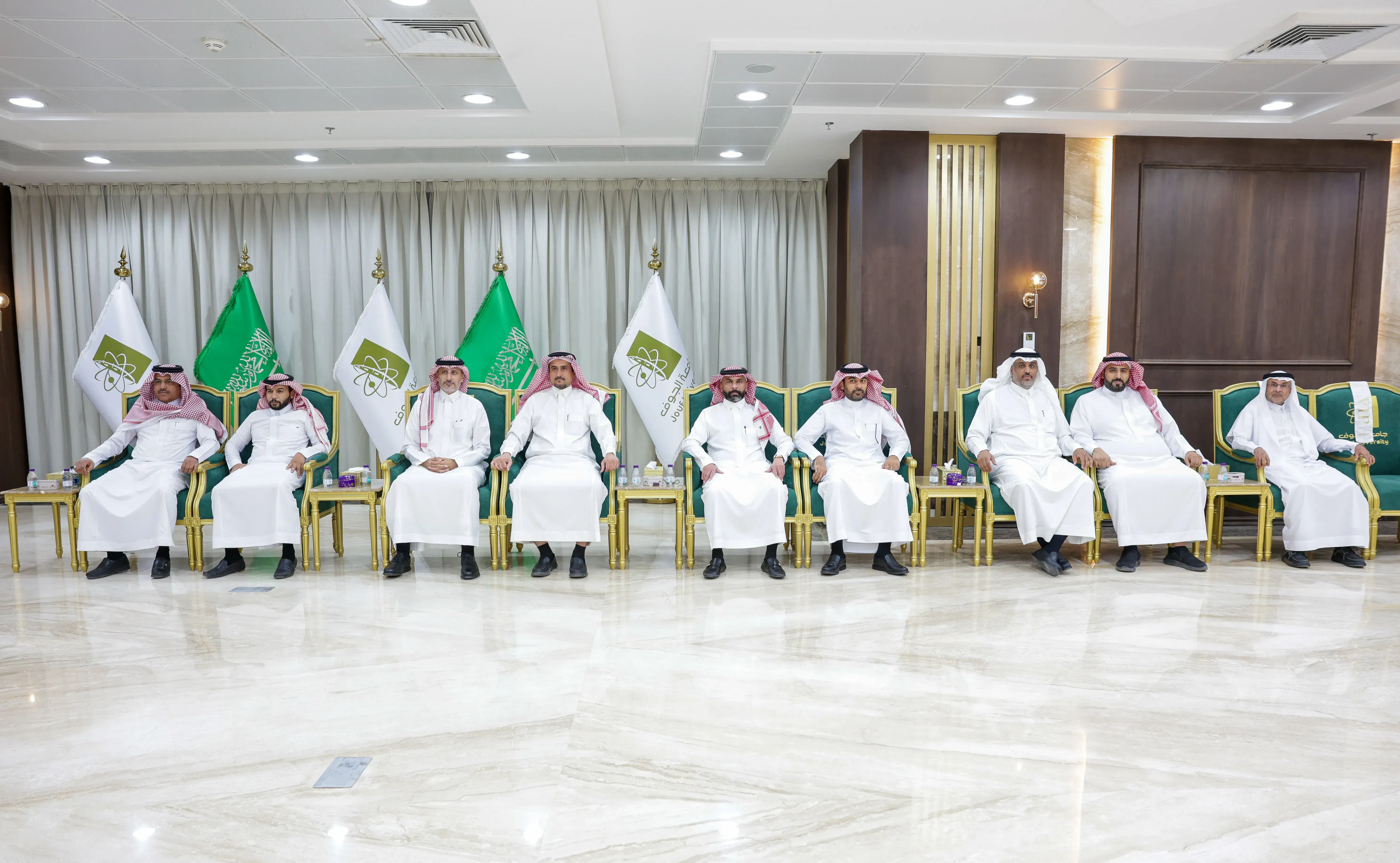
Minister of Education Meets Jouf University Leadership and Reviews Six Years of Transformation and Achievement
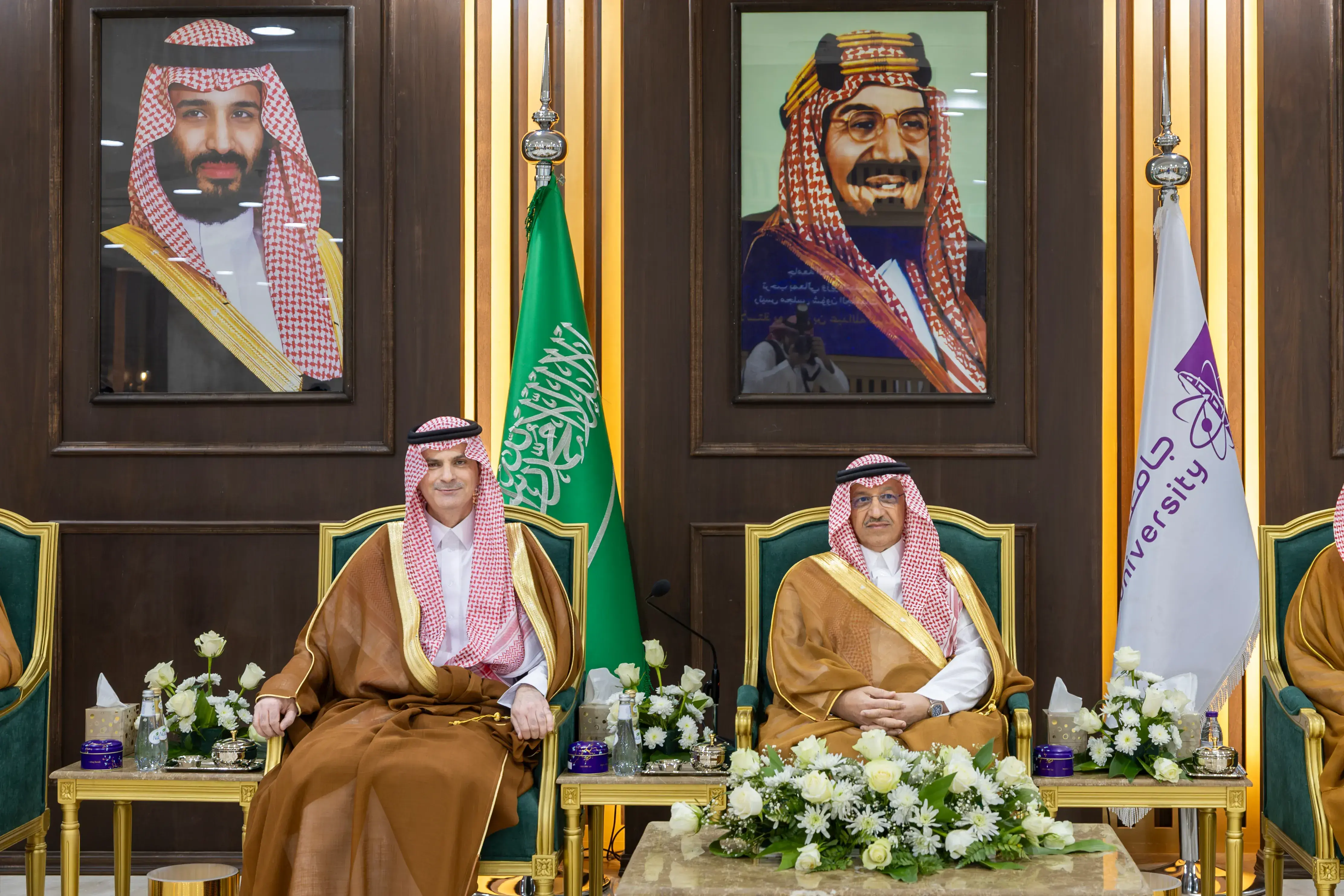
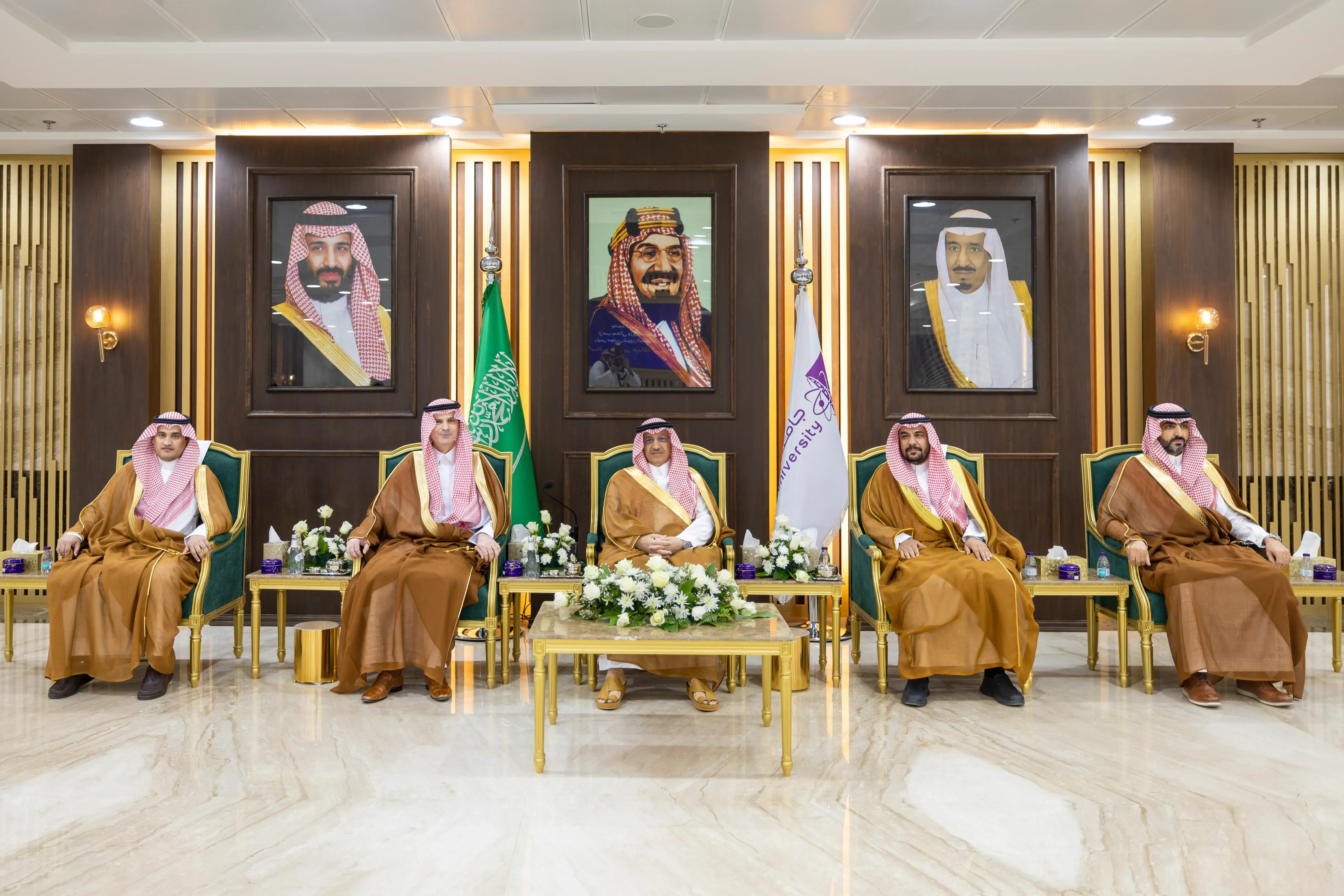
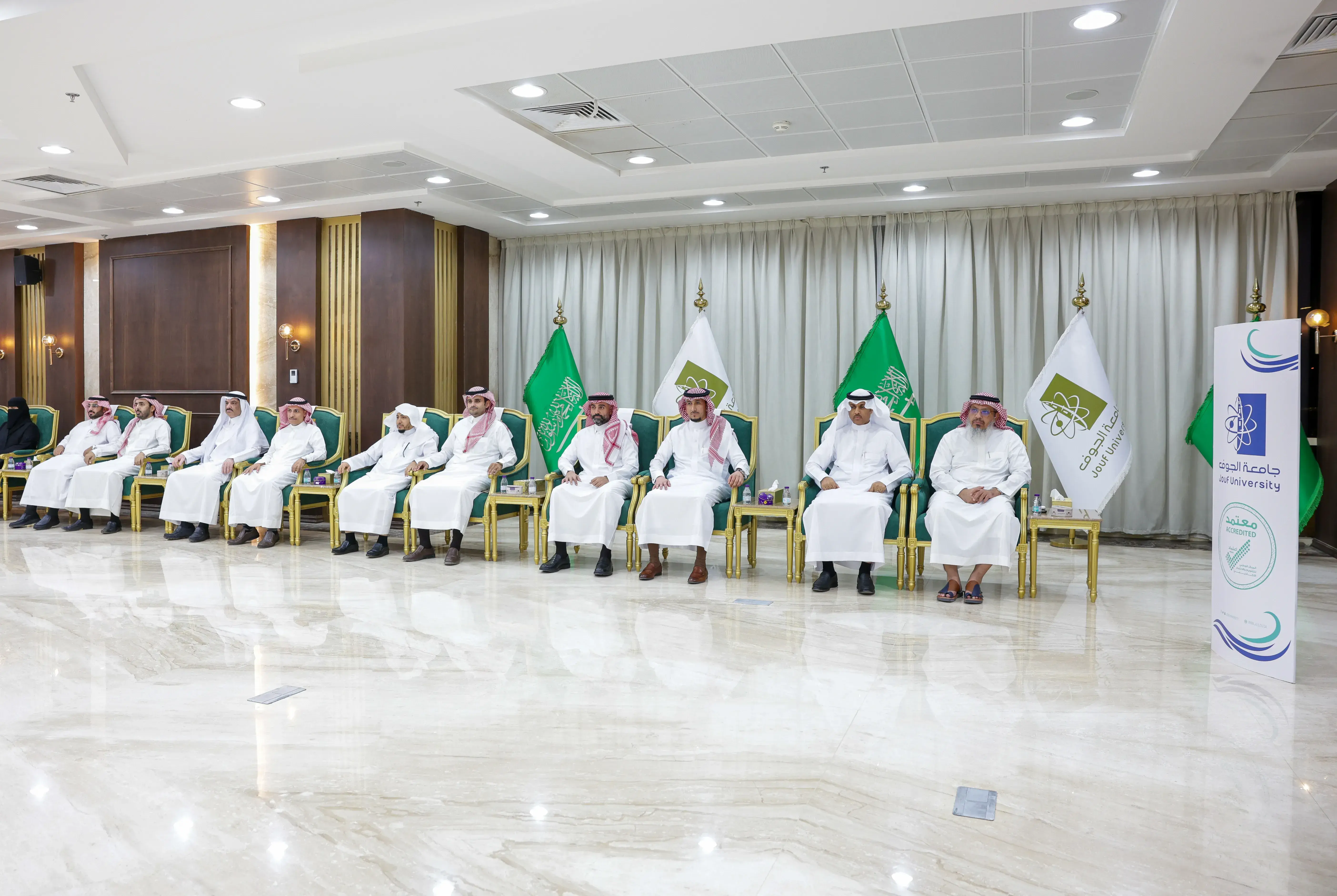
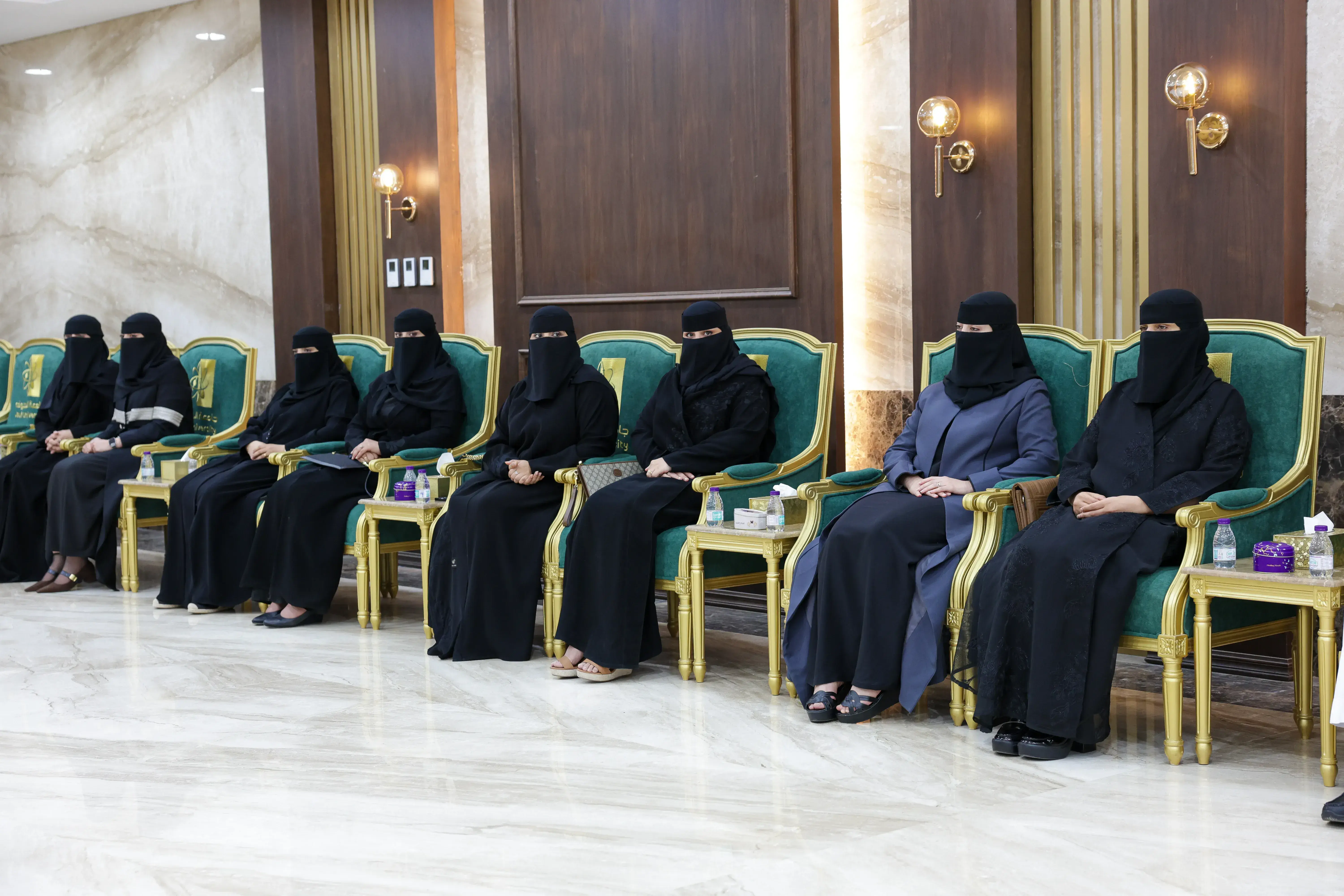
His Excellency the Minister of Education and Chairman of the Council of Universities’ Affairs, Yousef bin Abdullah Al-Benyan, met with the President of Jouf University, Prof. Dr. Mohammed bin Abdullah Al-Shaya, members of the University Council, and senior university leaders during his visit to Jouf University. The institutional meeting reviewed the University’s journey and the achievements of its 2020–2026 Strategy, highlighting the qualitative transformations achieved across education, research and innovation, governance, digital transformation, community responsibility, and financial sustainability.
During the meeting, His Excellency presented an overview of the Ministry of Education’s directions in governance, quality, and the development of the higher education system. This was followed by an open discussion with University leaders covering pathways for developing faculty capabilities, strengthening the research and innovation ecosystem, and enhancing the enablers required for a more stimulating, efficient, high-quality, and competitive university environment.
As part of the review of the University’s journey, a comprehensive presentation traced the evolution of its strategic plan—from establishing baselines and formulating objectives in 2020, through structured institutional implementation, to the measurable achievements, indicators, and impact realized by 2026. The presentation reflected a transformation in which the strategy evolved from a document setting direction into an integrated system that drives performance and generates impact.
His Excellency reviewed the University’s progress in institutional maturity. Jouf University obtained full institutional accreditation for the 2021–2026 period and achieved 100% compliance with the requirements for renewing its institutional accreditation, within an integrated framework encompassing governance, leadership, planning, teaching and learning, research and innovation, institutional resources, and community partnership.
In response to development needs and labor market requirements, the University’s academic system witnessed significant quantitative and qualitative expansion. The number of colleges increased from 12 in 2020 to 14 in 2026 following the establishment of the College of Nursing and the Applied College. The number of academic programs and tracks rose from 59 to 100, representing growth of 69.5%. Undergraduate programs and tracks increased from 29 to 60, while postgraduate programs rose from 30 to 40.
This expansion was accompanied by substantial progress in quality and academic accreditation. National accreditation coverage for bachelor’s programs reached 100%, while accreditation of postgraduate programs reached 83%. The number of programs holding international academic accreditation increased from six to 17, strengthening the quality of educational outcomes and the competitiveness of the University’s academic programs.
The meeting also highlighted the University’s efforts to develop the educational process and enhance graduate readiness. Seventy percent of faculty members hold doctoral degrees, while 18% graduated from universities ranked among the world’s top 200. The University updated 100% of its study plans in line with labor market requirements and embedded more than 70 professional certifications within its programs. Mandatory training was also introduced across all targeted programs, with students completing an average of six months of training prior to graduation.
Educational experience indicators showed that student retention reached 93%, while the rate of graduation within the prescribed timeframe improved by 77%. Student satisfaction with the educational experience reached 95%, and faculty satisfaction with the learning environment reached 94%. Employer satisfaction with graduates stood at 86%, while the proportion of graduates securing employment or enrolling in postgraduate studies within one year of graduation increased from 31.9% in 2022 to 56% in 2026, representing growth of 75.5%.
In scientific research, the University reviewed the quantitative and qualitative growth of its research output. The number of papers published annually in indexed journals increased from 1,094 in 2020 to 2,209 in 2026. Total publications during the 2020–2026 period reached approximately 12,144, with an annual growth rate of 18.47%.
High-quality scientific publishing recorded a significant leap. The proportion of papers published in first-quartile “Q1” journals increased from 17.3% to 65.1%, while the proportion of papers ranked among the world’s top 10% increased from 11% to 23.2%. The impact of scientific research also expanded beyond publication: annual citations rose from 6,234 to 32,875, while total citations during the six-year period exceeded 199,000. The University’s research impact factor also increased from 1.34 to 1.97.
A total of 54 Jouf University researchers were included in Stanford University’s list of the world’s top 2% most influential scientists. Funding for research projects during 2020–2026 exceeded SAR 67.2 million, alongside continued growth in joint scientific publishing and the expansion of the University’s participation in local and international research collaboration networks.
In innovation and knowledge transfer, the University succeeded in building an ecosystem that transforms research ideas into solutions and products with tangible impact. University affiliates were granted 88 patents and innovations locally and internationally, in addition to the registration of 12 patent applications with a number of national and international intellectual property offices. The University also secured 167 research awards, including 151 international and 16 national awards, across diverse disciplines including medical sciences, engineering, mathematics, physics, chemistry, environmental sciences, energy, and emerging technologies.
The meeting reviewed the University’s growing presence in global rankings. Jouf University was placed in the 901–950 band globally in the QS World University Rankings, the 601–800 band in the Times Higher Education World University Rankings, and 620th globally in the U.S. News ranking. University disciplines also recorded 26 appearances in international subject rankings, including notable progress in engineering, pharmacy and pharmacology, and polymer science.
In the field of partnerships, the number of agreements signed annually increased from four in 2020 to more than 25 in 2026. Over the six-year period, the University signed more than 150 agreements, memoranda of cooperation, and memoranda of understanding across education, research, training, and consultancy. These partnerships expanded the University’s institutional network, strengthened the exchange of knowledge and expertise, and supported the achievement of its strategic objectives.
At the governance level, Jouf University consolidated an institutional framework that promotes compliance, transparency, and risk management through 121 governance registers, 44 risk registers, 44 compliance registers, and 33 governance manuals. It also established a legislative base comprising 150 regulations and policy documents governing institutional operations.
Digital transformation also accelerated considerably. The number of electronic services increased from 129 in 2020 to more than 250 in 2026, while digital systems and platforms expanded from two to 15. Data governance and open-data compliance reached 100%, data asset inventory reached 98%, and the University’s cybersecurity index recorded a 100% improvement over the course of the strategic plan.
The University’s impact extended to the wider community. Volunteer opportunities increased from 62 in 2020 to 4,798 in 2026, while the number of volunteers rose from 725 to 39,663. Over six years, a total of 58,609 volunteers participated in more than 8,000 volunteer opportunities, generating an estimated economic impact exceeding SAR 17.9 million.
In health and community services, the number of medical clinics doubled from seven to 14, while dental clinics increased from five to 10. The total number of beneficiaries of the University’s health services during 2022–2026 reached approximately 300,000, reflecting the University’s direct role in serving people and contributing to regional development.
His Excellency was also briefed on the University’s efforts to diversify resources and establish more sustainable revenue streams. Jouf University’s balance in the Higher Education Fund exceeded SAR 362 million, while its endowment portfolio reached SAR 25 million and total investment value stood at SAR 10.5 million. These efforts were accompanied by the establishment of a Board of Trustees for the endowment, registration on the “Ehsan” platform, and the development of a plan to market University assets and grow self-generated revenues.
The President of Jouf University, Prof. Dr. Mohammed bin Abdullah Al-Shaya, affirmed that the meeting between His Excellency the Minister of Education and the University’s leadership reflects the support, attention, and close follow-up afforded to Jouf University and provides further momentum for its development journey and the achievement of its objectives.
He expressed his appreciation to the wise leadership—may Allah support it—for its unlimited support of the higher education sector, to His Royal Highness Prince Faisal bin Nawaf bin Abdulaziz, Governor of Al-Jouf Region, for his continued support of the University, its projects, and development programs, and to His Excellency the Minister of Education for his continuous follow-up and guidance in support of the University’s development.
Prof. Al-Shaya noted that the figures and indicators reviewed by His Excellency do not represent the end of a phase, but rather a foundation from which the University is moving toward a more ambitious future. He emphasized that Jouf University does not measure its success merely by the number of initiatives implemented, but by its ability to translate plans into results, knowledge into solutions, and achievements into sustainable impact serving students, society, and the nation.
He added that the University is advancing toward its next strategic phase on the strength of a developed academic and research ecosystem, growing institutional maturity, effective partnerships, and human capabilities equipped to shape the future. These foundations will enhance the University’s competitiveness and strengthen its contribution to achieving the objectives of Saudi Vision 2030.
The meeting ultimately captured Jouf University’s six-year journey through a series of clear transitions: from expansion to quality, from scientific publishing to research impact, from initiatives to measurable outcomes, and from resource management to resource development—as the University continues its journey from planning to impact, with greater confidence and an ambition extending toward the future.