


Jouf University President Reviews the College of Science Annual Report and Its Key Achievements and Future Targets
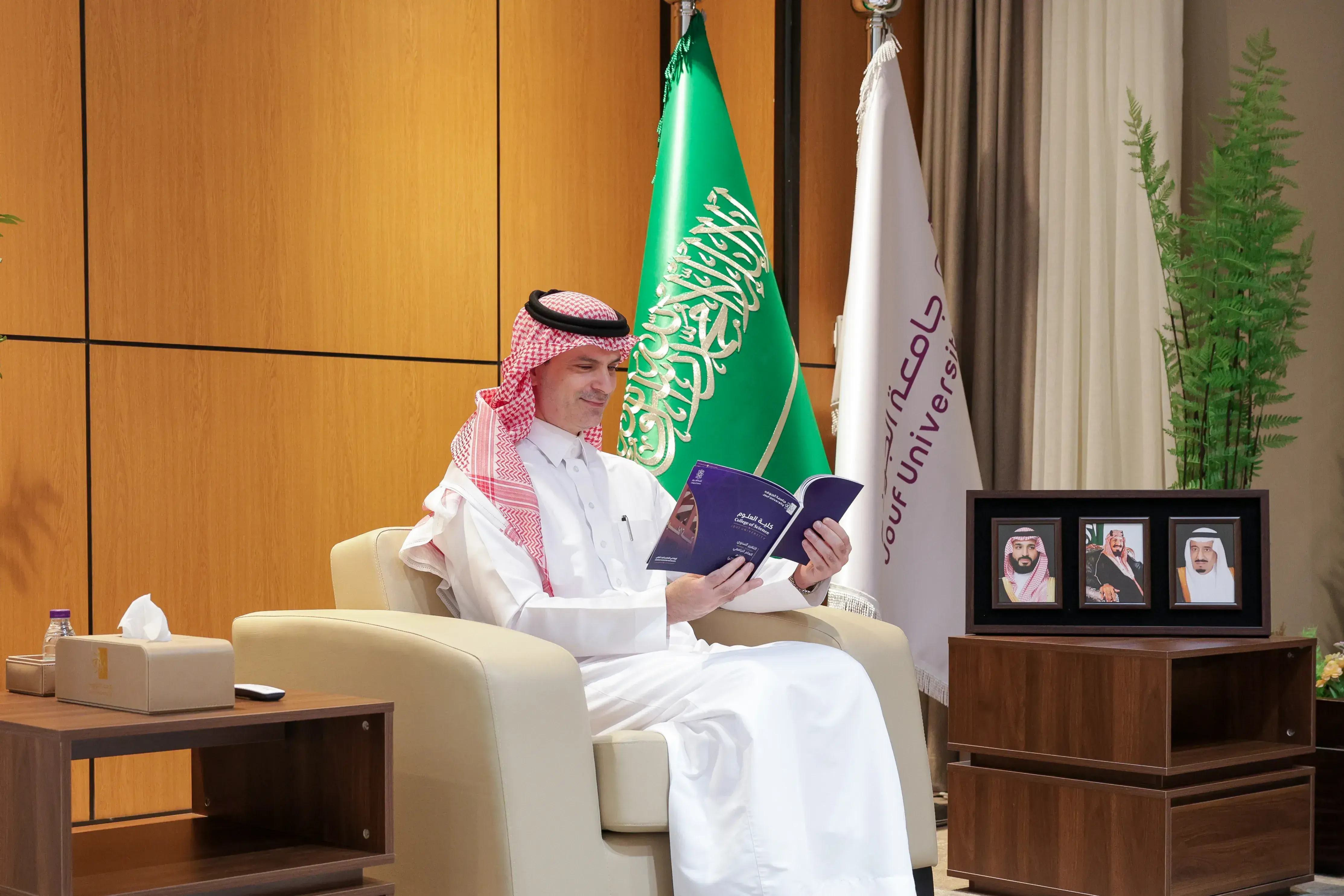
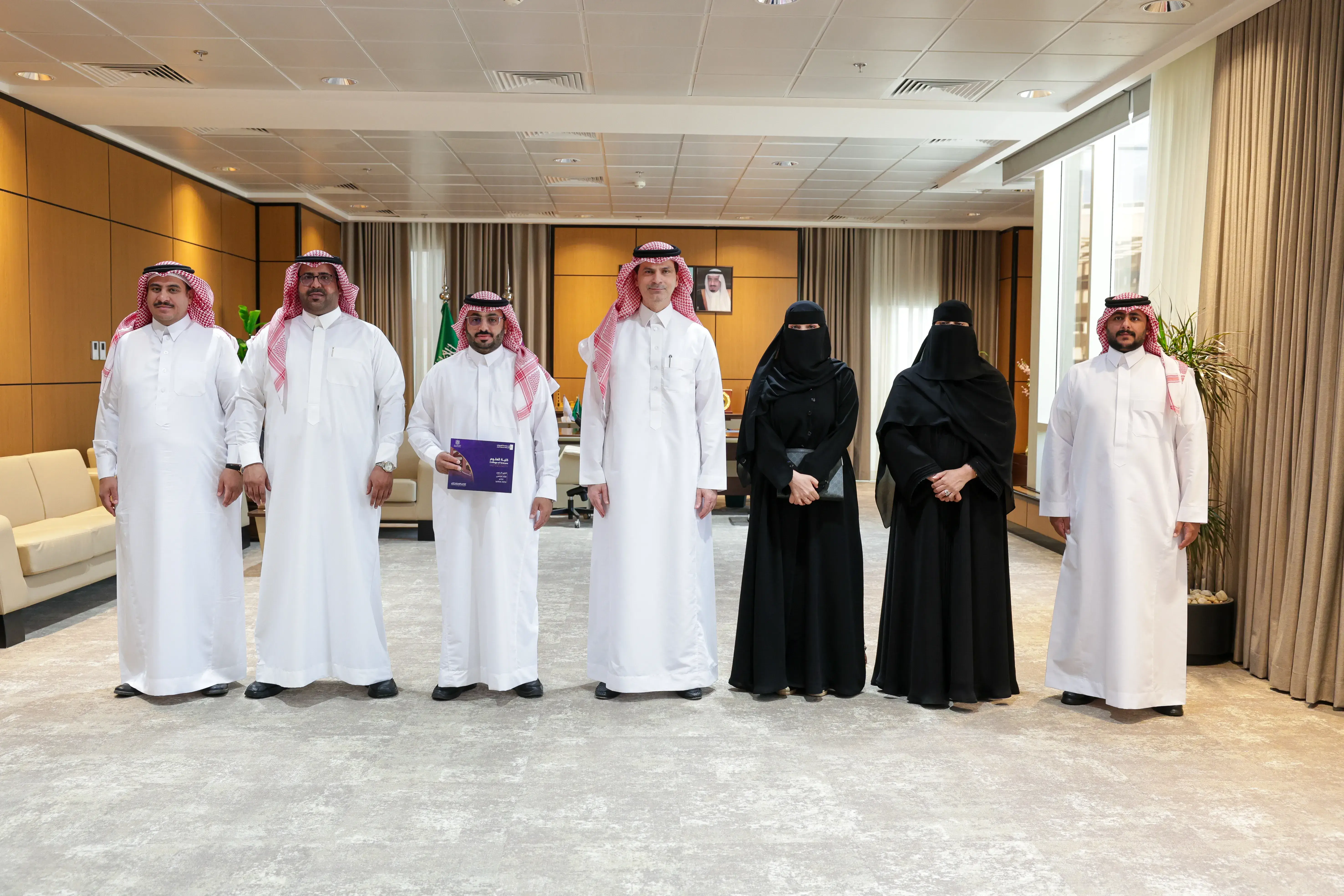
The President of Jouf University, Prof. Dr. Mohammed bin Abdullah Al-Shaya, received the Dean of the College of Science, Dr. Mohammed bin Mutrib Al-Dandani, and the College’s vice deans. During the meeting, they reviewed the College of Science Annual Report for the academic year 1447 AH, highlighting key performance indicators, academic, research, and community achievements, as well as the College’s future targets and development plans for the next phase.
The President was briefed on the College’s progress throughout the academic year and its achievements across several strategic areas, including the quality of teaching and learning, scientific research and innovation, graduate readiness and alignment of academic program outcomes with labor market needs, partnerships and social responsibility, professional development, excellence, and institutional recognition. These efforts are aligned with the University’s drive to build a more competitive and sustainable academic and research ecosystem.
The report highlighted several notable indicators reflecting the College’s strong academic and research activity. The College enrolled 1,922 students and recorded 1,064 published scientific papers, 85,646 scientific citations, and 576 papers published in Q1 journals. In addition, 18 researchers from the College were listed among the world’s top 2% of scientists. During the year, the College also organized 82 scientific events, implemented 16 community initiatives, delivered more than 80 training programs, and contributed 20,664 volunteer hours.
In the area of teaching quality and academic accreditation, the meeting reviewed the College’s progress in accrediting its academic programs and developing its postgraduate education system, in addition to introducing and enhancing specialized programs that respond to scientific developments and labor market needs. These efforts are aimed at strengthening the competitiveness of graduates and improving the quality of the educational experience and its outcomes. The report also showed improved student and faculty satisfaction with the learning environment, alongside continued efforts to increase student retention and on-time graduation rates.
Scientific research and innovation emerged as one of the College’s leading areas of excellence, reflected in the growth, quality, and impact of its research output, as well as in patent registrations and participation in international forums. Among its notable achievements was winning a silver medal at the Geneva International Exhibition of Inventions. The College is also connected to a major global scientific achievement through Prof. Omar Yaghi, a member of its Advisory Council, who was awarded the 2025 Nobel Prize in Chemistry, underscoring the breadth of the College’s scientific network and its engagement with internationally distinguished researchers.
The report also addressed graduate readiness and professional impact. The indicators showed significant progress in graduate employment across several departments and improved alignment between jobs and academic specializations. The Department of Physics achieved a 100% employment rate, while the departments of Chemistry, Biology, and Mathematics also recorded strong results. These outcomes reflect the College’s efforts to align academic programs with labor market requirements, enhance cooperative training, and connect graduation projects with national priorities and development challenges.
In the area of human capital development, 29 faculty members received academic promotions during the year. The College also implemented more than 80 training and development programs covering future skills, digital transformation, research skills, advanced technologies, scientific specializations and innovation, professional development and guidance, and specialized professional certifications. These initiatives support the creation of an academic environment that encourages scientific excellence and continuous development.
The meeting also reviewed the College’s contributions to community service and partnership development. The College implemented dozens of scientific and awareness events and initiatives and strengthened its network of local and international collaborations and partnerships. These efforts contribute to transferring knowledge from the academic environment to society, expanding the College’s impact, and reinforcing the role of basic sciences in supporting development and innovation.
The President was also briefed on the College’s plan and future targets for 1448 AH, which include a range of strategic initiatives. Key targets include increasing the student retention rate to 95%, qualifying 100 students to obtain professional certifications, organizing an internal innovation competition aimed at producing 10 innovative projects and three new patents, launching five community initiatives, establishing five new international partnerships, and organizing an international scientific conference with participation from 20 countries. The plan also includes a comprehensive update of undergraduate curricula and further development of the academic advising system.
The meeting emphasized the importance of building on these results, continuing to enhance the quality of academic programs, strengthening high-impact scientific research and innovation, aligning the College’s outputs with the needs of development sectors and the labor market, and expanding international scientific partnerships. It also stressed the importance of transforming the College’s achievements into a foundation for higher levels of excellence and competitiveness, in line with Jouf University’s future aspirations and targets and the objectives of Saudi Vision 2030.