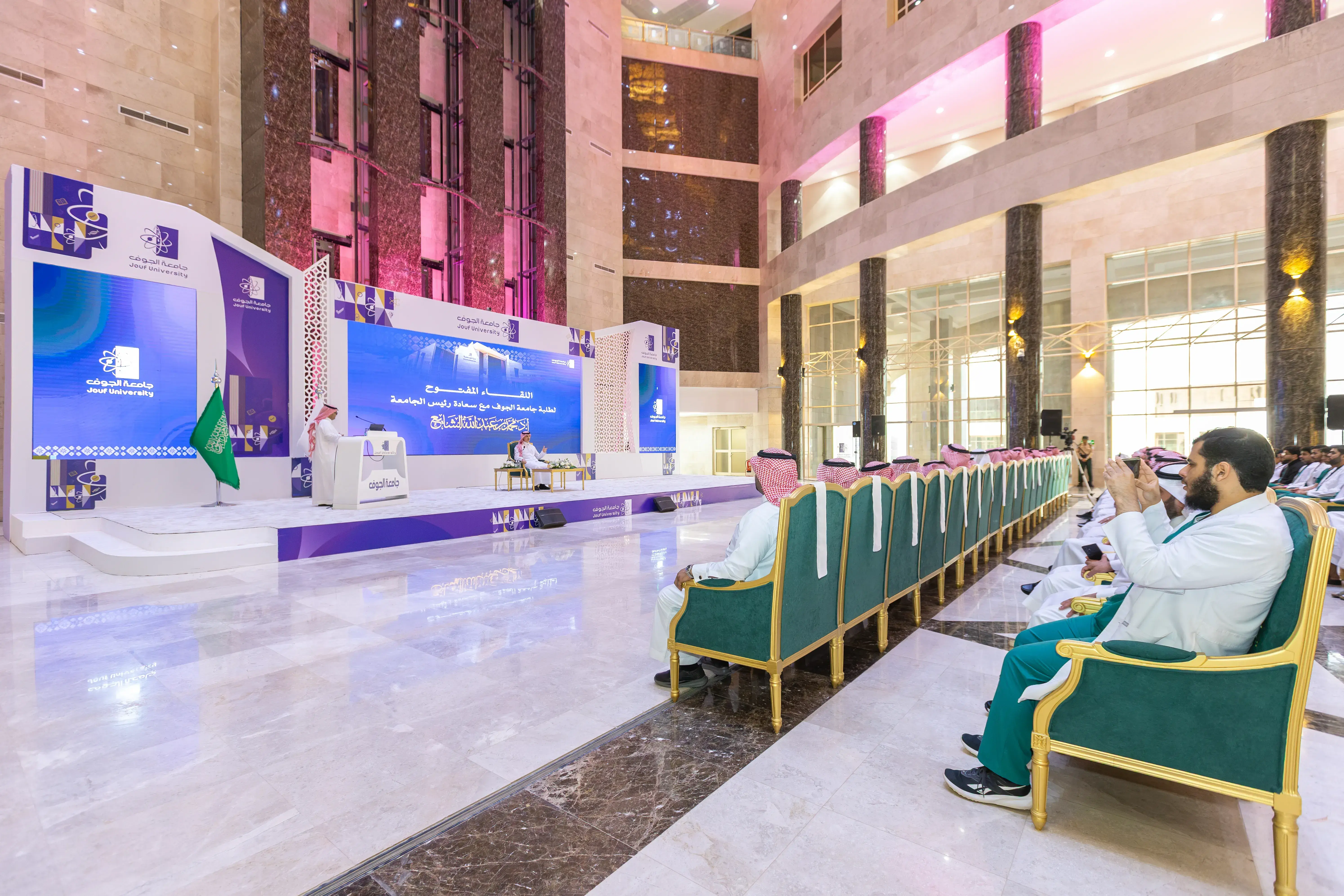
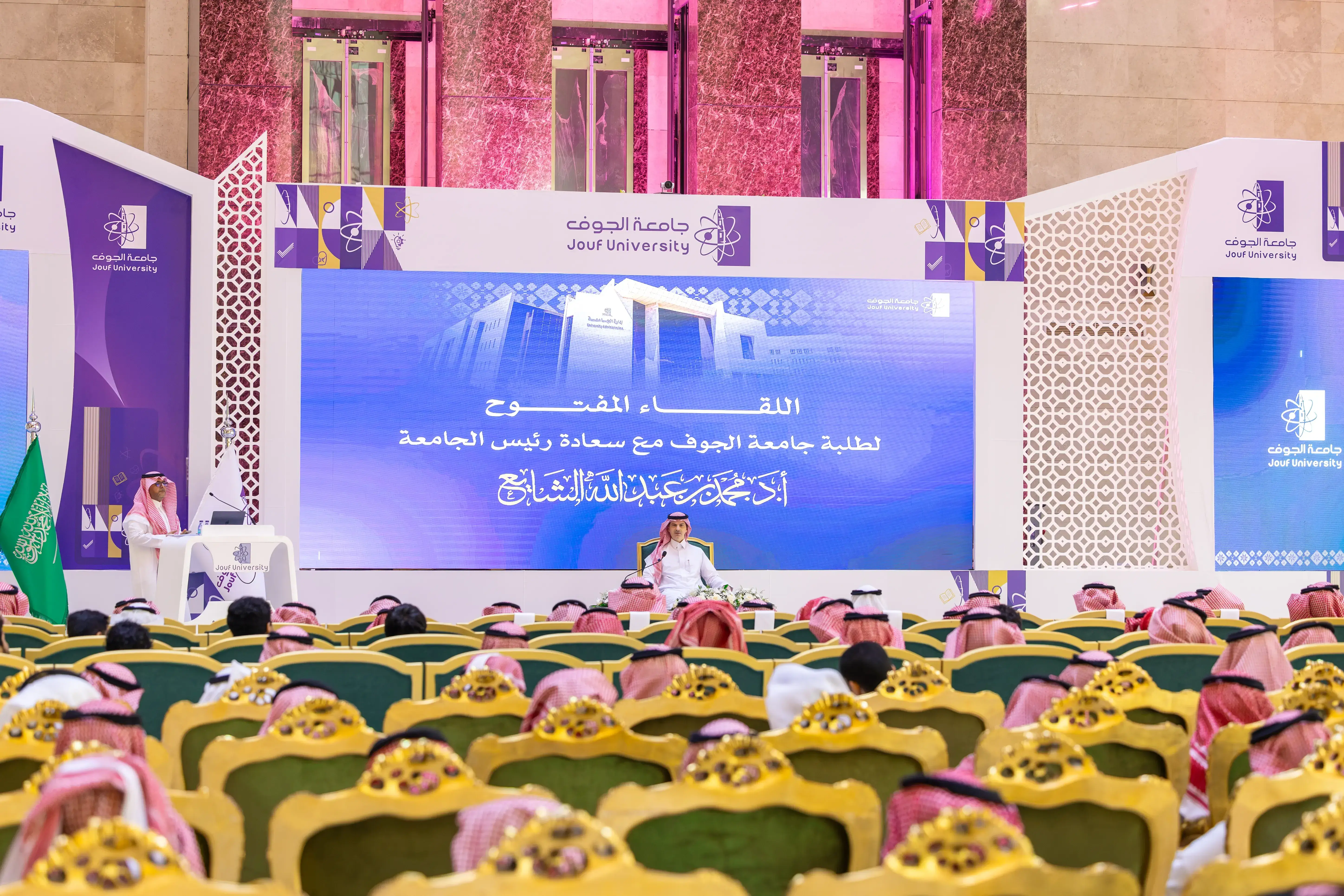
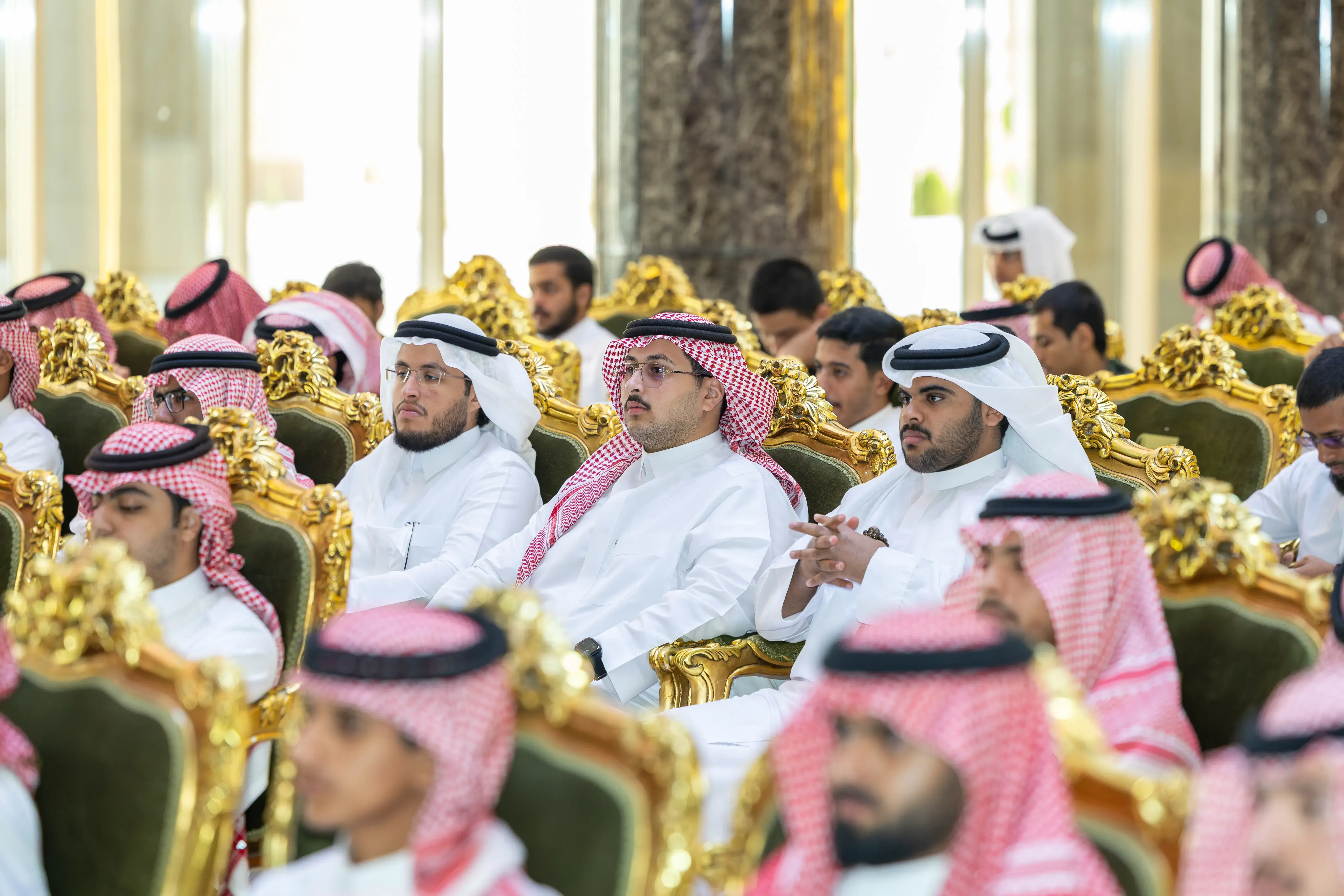
Jouf University President Prof. Mohammed bin Abdullah Al-Shaya’ Meets with Students in an Open Dialogue to Strengthen National Identity, Empower Students, and Shape the University’s Future
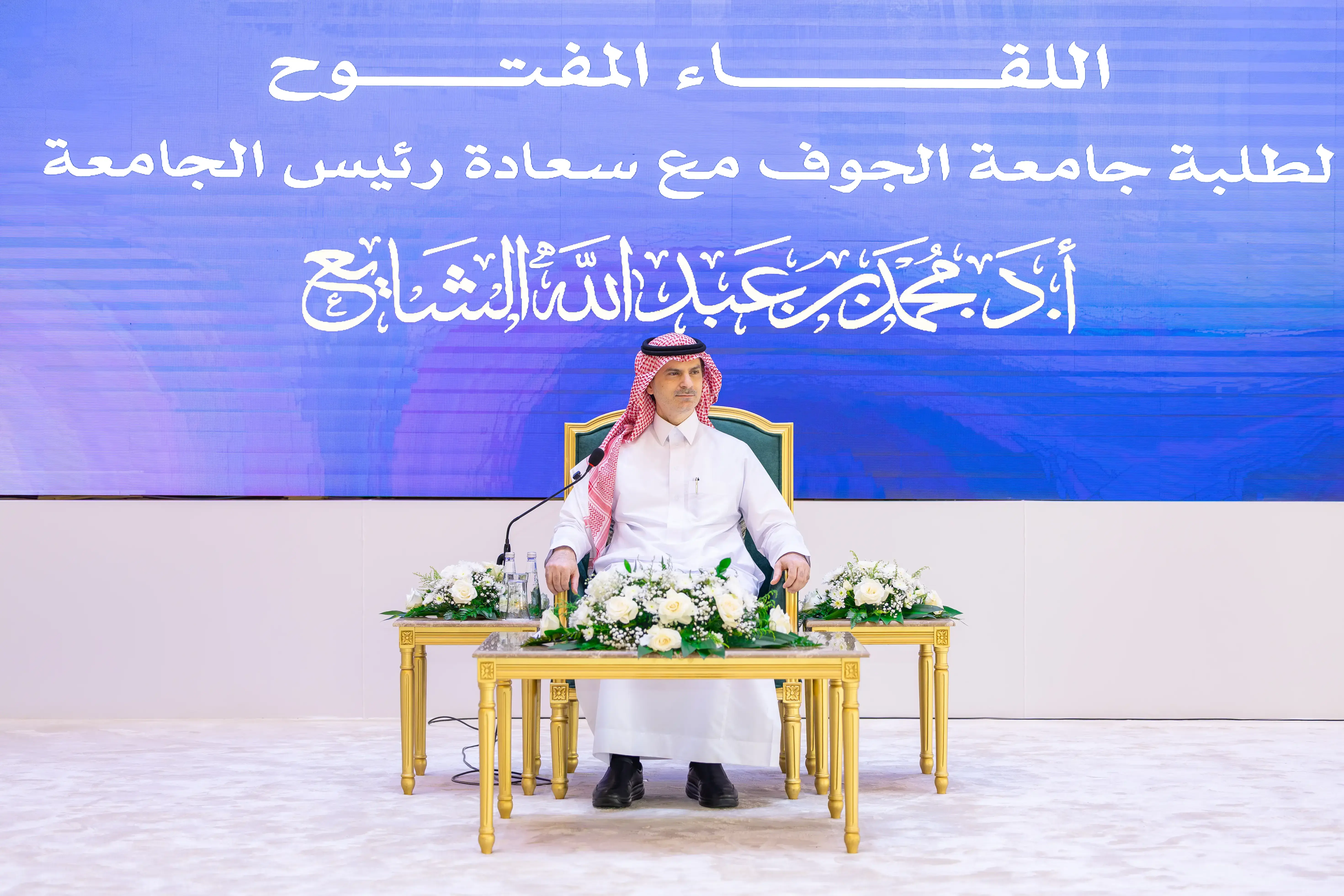
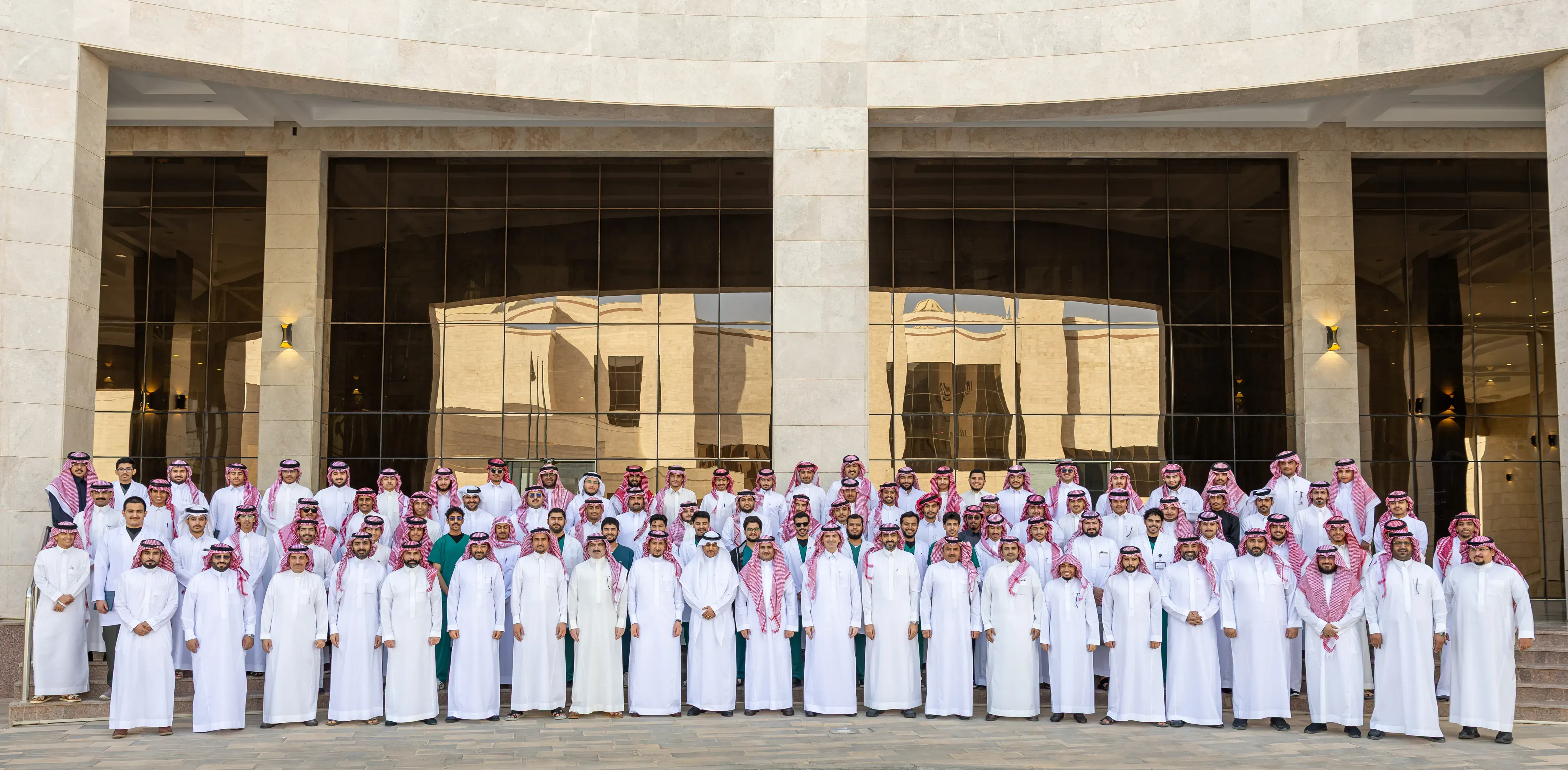
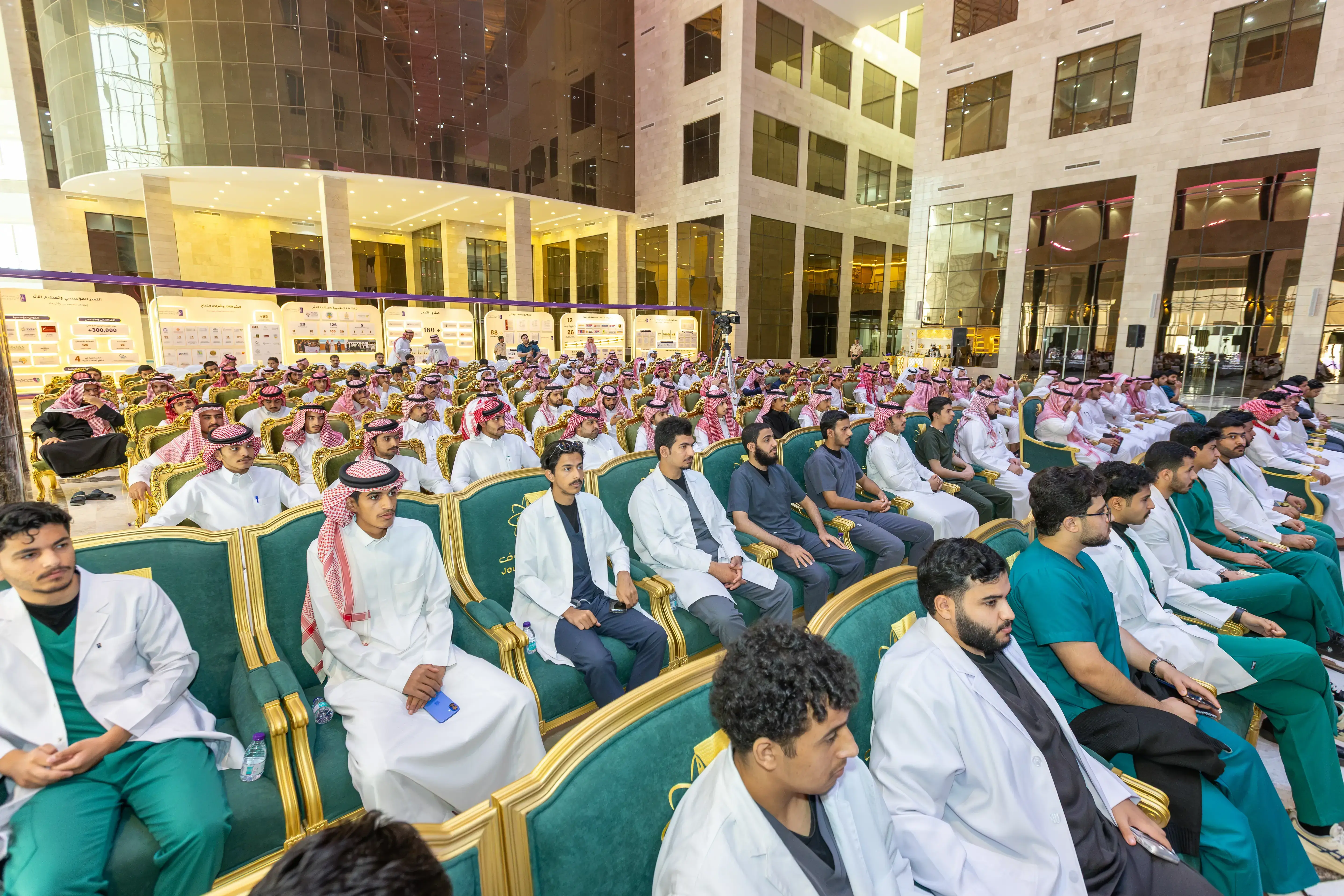
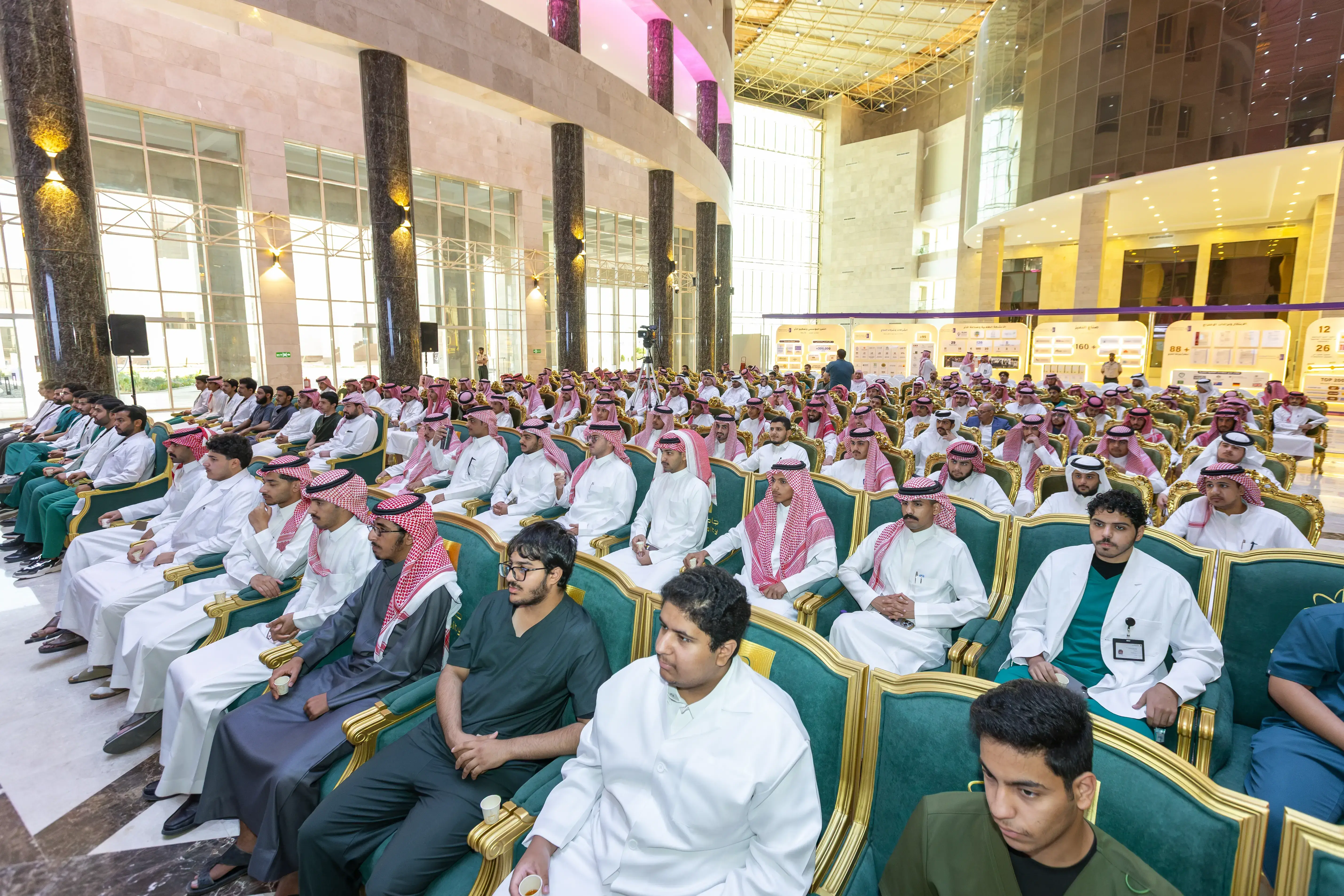
In a meeting that reflected the strong relationship between Jouf University’s leadership and its students, while reinforcing the concept of partnership in decision-making and enhancing the university experience, Jouf University President Prof. Dr. Mohammed bin Abdullah Al-Shaya’ held an open dialogue with male and female students under the theme “Decision-Makers… Partners in Shaping the Future.” The meeting was attended by the Vice President for Educational Affairs, Dr. Alaa bin Saleh Al-Arjan, along with several university staff members and students. The event formed part of the University’s commitment to strengthening direct communication with students, listening to their views and aspirations, and engaging them in shaping its Third Strategic Plan, in alignment with the objectives of Saudi Vision 2030.
The meeting provided an interactive platform for discussing several priority issues central to the University’s mission, particularly strengthening intellectual security, reinforcing national identity and the values of loyalty and belonging to the homeland and its wise leadership, and raising students’ awareness of their responsibilities toward their country and society. These priorities reflect the University’s educational and developmental role in nurturing Saudi citizens who take pride in their religion, values, and national identity, recognize their responsibility to safeguard the nation’s security, stability, and achievements, and actively contribute to its continued development and prosperity.
In this context, the meeting highlighted the importance of promoting intellectual awareness among students, protecting them against extremist and deviant ideologies, developing their capacity for informed and responsible thinking, and deepening their pride in national identity and fundamental values. It also emphasized the University’s commitment to complying with Royal directives, instructions, and regulatory circulars issued to universities concerning the preservation of national identity, including those related to adherence to the national dress code in accordance with applicable regulations and directives. Such measures reflect pride in Saudi Arabia’s cultural heritage and authentic social values while strengthening the sense of national responsibility among university students and staff.
Student excellence and achievements were another major focus of the meeting. The President and participants highlighted the accomplishments of Jouf University’s male and female students, recognizing their outstanding scientific and innovative capabilities and promising talents, which have contributed to raising the profile of both the University and the Kingdom in national and international forums.
The meeting reviewed the awards and distinguished positions earned by students in innovation, invention, scientific, technological, and sporting competitions. University student achievement indicators recorded 160 student awards in extracurricular activities, including achievements in innovation and sports, alongside 79 innovation awards, 29 sports awards, and 19 international medals in innovation. Notable accomplishments included medals at the International Exhibition of Inventions Geneva, a gold medal at the Asian Karate Championships, and distinguished participation in the Hajj Hackathon.
Discussions further emphasized the importance of sustaining support for student talent, expanding opportunities for participation in national and international competitions, and fostering an environment that encourages creativity and innovation. Such efforts aim to transform individual excellence into institutional and national achievements while strengthening Jouf University’s presence in scientific, innovation, and sporting events.
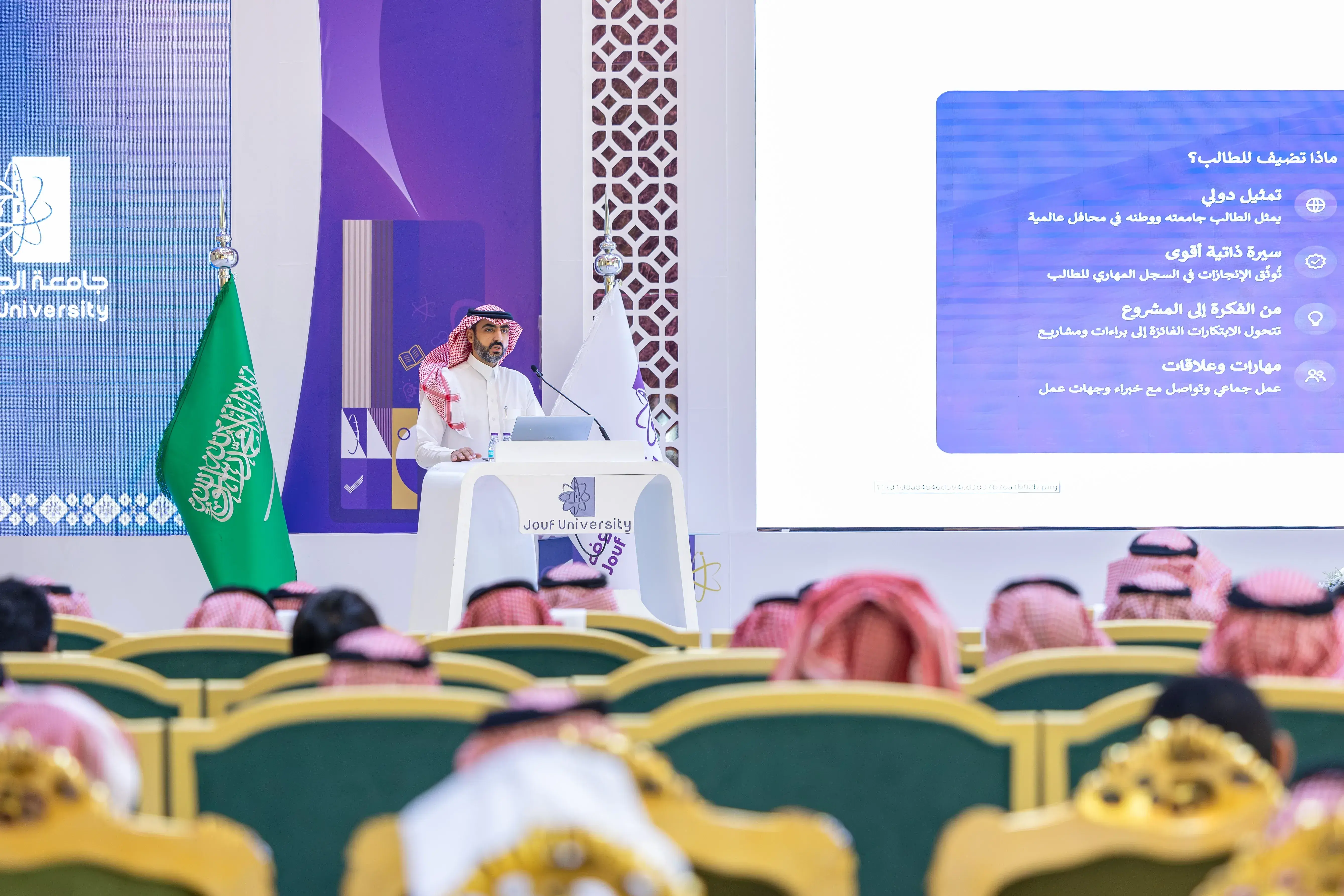
The meeting began with a presentation delivered by the Vice President for Educational Affairs, Dr. Alaa bin Saleh Al-Arjan, entitled “From Service to Impact.” The presentation outlined the comprehensive range of services, programs, and initiatives offered by the University throughout students’ academic journeys, from admission to graduation.
He explained that the University provides more than 124 student services across nine major areas, delivered by over 35 entities. These encompass academic and educational services, training and professional development, healthcare, student guidance, technical and financial services, scientific research, and student and community activities. Together, these services form an integrated system designed to enhance the overall university experience and strengthen graduates’ readiness to compete in the labor market.
The presentation also highlighted the University’s academic and educational resources, including 67 academic programs across various levels of study, more than 240 educational laboratories, and an integrated network of libraries and knowledge resources containing over 237,000 information resources. In addition, the University provides academic guidance, psychological and social support, programs for gifted and high-achieving students, and free healthcare services through university clinics and specialized medical facilities.
The presentation reviewed the University’s efforts to enhance students’ career readiness through more than 150 partnerships and agreements for training and employment with public- and private-sector organizations. These efforts include expanding cooperative training opportunities, professional certifications, specialized workshops, and skills-development programs.
It also highlighted developmental initiatives that enable students to acquire additional knowledge and skills, including minor academic programs, academic acceleration, flexible learning pathways, the “Tatweer” Platform, the “Tamkeen” Program, and the “Waed” Graduation Projects Exhibition.
In the area of innovation and entrepreneurship, the presentation highlighted the University’s integrated support system for student ideas and projects. This includes business incubation and acceleration services, assistance with patent registration, organizing competitions and hackathons, and supporting student participation in local and international exhibitions and competitions. These initiatives help transform innovative ideas and graduation projects into practical applications, entrepreneurial ventures, and emerging startups, thereby strengthening students’ contributions to economic development and the knowledge economy.
The presentation also covered developmental services associated with university life, particularly the University’s 19 general and specialized student clubs, cultural, social, and sporting activities, and support programs for participation in national and international events. It additionally highlighted electronic services and digital platforms that facilitate access to academic and administrative services, as well as initiatives aimed at improving the beneficiary experience. These efforts reflect the University’s commitment to placing students at the center of the educational process and recognizing them as active partners in developing its services.
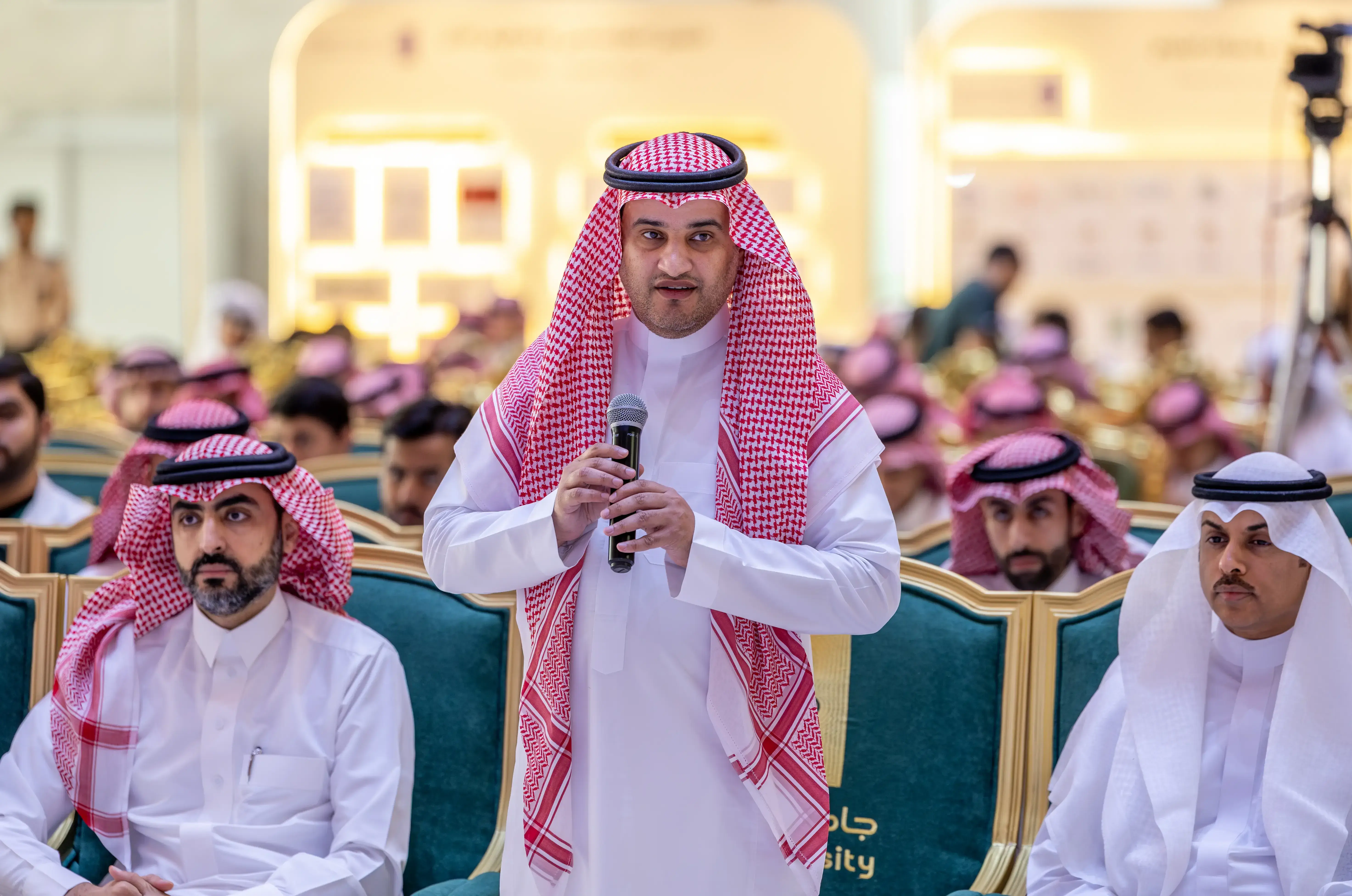
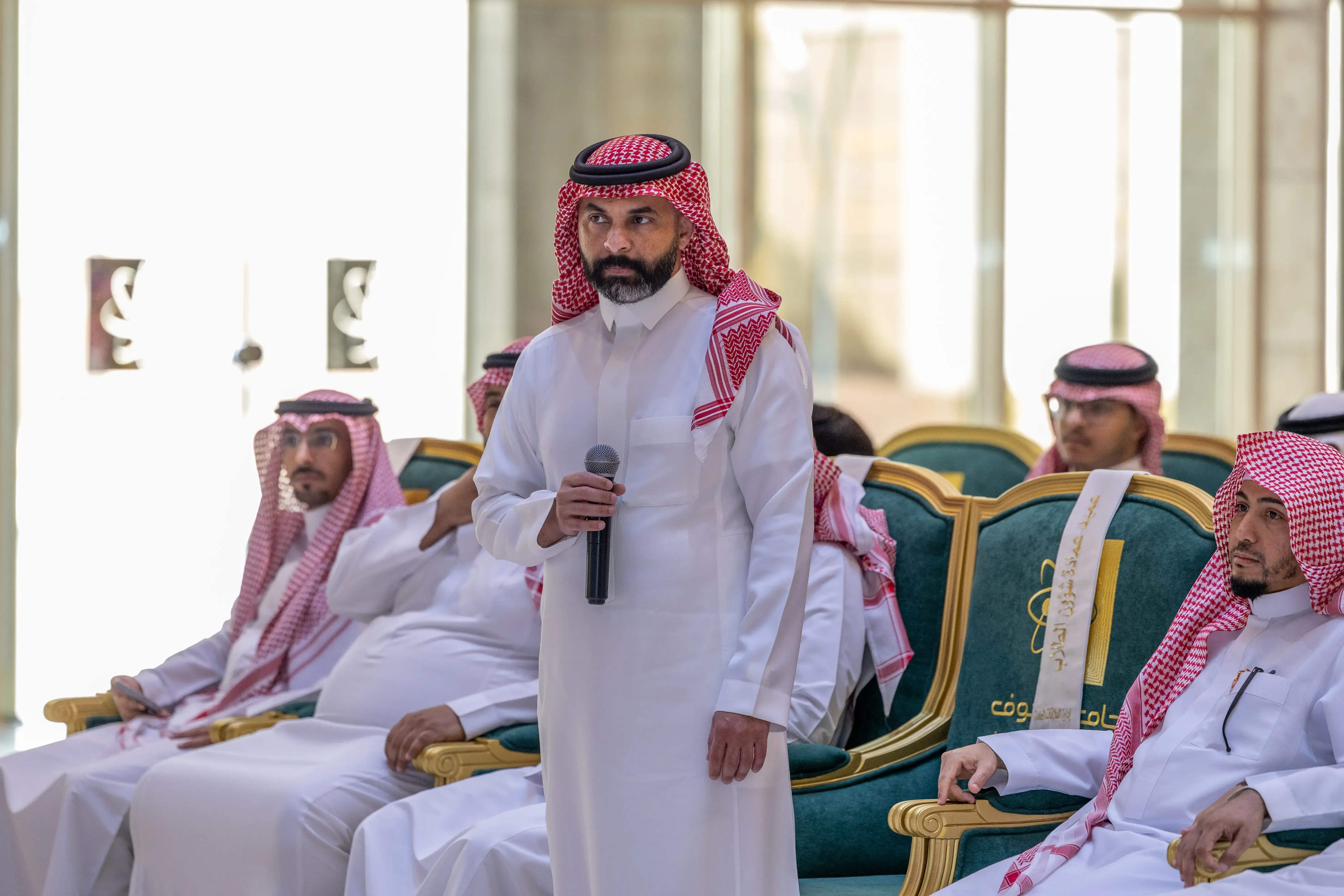
Following the presentation, male and female students were invited to submit their questions and suggestions electronically through a dedicated link, allowing their contributions to be addressed during the open dialogue with the University President. This approach reflected the University’s commitment to amplifying student voices and encouraging their participation in discussions concerning their academic and professional futures.
The dialogue featured a range of questions and proposals that demonstrated students’ awareness and ambitions. One question addressed the University’s role in strengthening intellectual security, reinforcing the values of loyalty and belonging to the homeland and its leadership, protecting students from extremist ideologies, and enabling them to contribute to safeguarding national achievements and serving their country.
Other questions explored the University’s plans to introduce new academic specializations aligned with future professions and labor market demands, as well as expanding partnerships with companies, industrial institutions, hospitals, and research organizations to provide broader training and employment opportunities.
Students also raised questions about the University’s progress in international rankings and how they could contribute to strengthening its competitiveness and academic and research standing at both national and international levels.
Further discussions addressed future support for talented students, providing distinguished opportunities to participate in international scientific and innovation competitions, and mechanisms for transforming graduation projects and creative ideas into marketable products, business ventures, and startups.
Students also proposed expanding their involvement in organizing and leading activities and events, increasing specialized volunteering opportunities to serve the Al-Jouf community, and enabling students in technical disciplines to participate in designing smart and digital solutions that improve university services.
These contributions formed the basis of a constructive dialogue on the future of university services, programs, and initiatives, and on ways to incorporate students’ perspectives and suggestions into developing the educational and research environment, expanding opportunities for excellence, creativity, and entrepreneurship, and enriching university life.
Such efforts align with the University’s preparations for its Third Strategic Plan and reinforce an institutional approach that recognizes students as partners in development and in creating meaningful impact.
The meeting represents a continuation of Jouf University’s approach to strengthening institutional communication with its students, activating student advisory councils and channels for participation and feedback, and using student suggestions to support continuous service improvement.
University indicators showed that student satisfaction with services had reached 92%, with a target of increasing this figure to 95%, reflecting ongoing efforts to improve the quality of university life and the efficiency of services provided to beneficiaries.
The meeting concluded by emphasizing the importance of maintaining constructive dialogue between the University’s leadership and its students, and encouraging greater student involvement in developmental initiatives and programs.
These efforts reinforce a sense of responsibility and belonging while contributing to the development of an aware, qualified, and innovative generation equipped with knowledge, skills, and national values, capable of actively supporting the Kingdom’s aspirations and the ambitious objectives of Saudi Vision 2030.
Ultimately, the meeting conveyed a clear institutional message: students are not merely beneficiaries of university services; they are active partners in advancing the University’s present, shaping its future, and contributing to the service, progress, and prosperity of their homeland.