Jouf University President Prof. Mohammed bin Abdullah Al-Shaya Reviews University Hospital and Clinics’ 2026 Achievements: Over 35,000 Beneficiaries, 29 Specialized Clinics, and a 321% Increase in Beneficiary Numbers
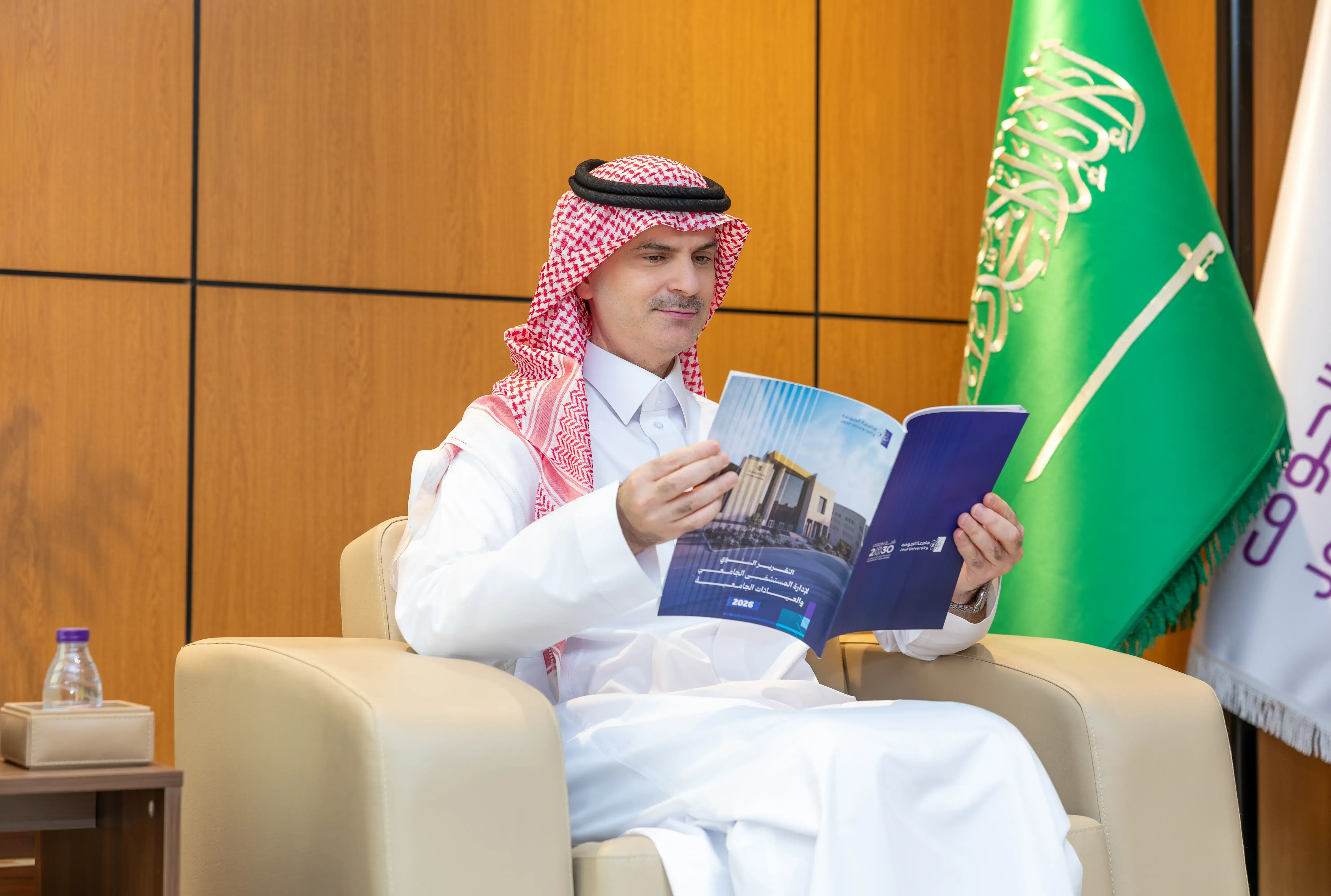
As part of Jouf University’s efforts to advance institutional development, enhance healthcare services, and strengthen its contribution to community and regional development, University President Prof. Mohammed bin Abdullah Al-Shaya received Vice President Prof. Saad bin Awadh Al-Anzi; Dr. Basel bin Mohammed Al-Omair, Supervisor of the University Clinics and University Hospital Administration; and the Director of the University Clinics Administration and the administrative team. During the meeting, the President reviewed the 2026 annual achievements report of the University Hospital and University Clinics, which highlighted key performance indicators and medical, operational, and community accomplishments. These achievements reflect the rapid development of healthcare services, the expansion of medical specialties, improved operational efficiency, and a stronger focus on quality of care and patient safety.
The meeting highlighted major improvements across the University’s healthcare system, including the expansion of treatment, preventive, and diagnostic services; upgrades to operational infrastructure and medical equipment; and the implementation of digital systems. It also reviewed health initiatives and community engagement activities that have reinforced the University’s role as an educational, research, and development institution dedicated to placing its resources and expertise at the service of people and society.
The report revealed that 35,554 beneficiaries received medical services during 2026, representing a 321% increase in beneficiary numbers and reflecting enhanced operational capacity and broader service coverage. The University’s clinic network also expanded significantly, with the number of consultant-led and specialized clinics rising from nine in 2023 to 29 in 2026. The addition of 20 clinics across a range of medical specialties has strengthened the integration, accessibility, and quality of healthcare.
In medical and diagnostic services, the report recorded 6,238 patients at consultant-led clinics, 2,531 patients at general practice clinics, 1,803 emergency department visits, and responses to 121 emergency calls. It also documented 14,943 laboratory tests, 5,678 prescriptions dispensed, and 3,288 beneficiaries served by health service centers at the University’s branch campuses. These figures demonstrate the scale of clinical activity and the diversity of treatment and diagnostic services available.
The report also covered the expansion of specialized medical services, improvements to pharmacy and medication dispensing services, laboratory testing, and emergency response. It highlighted the provision of modern medical devices and equipment, alongside improvements to operating procedures, to meet growing demand and enhance the efficiency and sustainability of healthcare services.
In social responsibility, the report outlined 11 health and community initiatives and engagements that reached 17,907 beneficiaries. These included health awareness programs, early screening for chronic diseases, blood donation campaigns, national initiatives, and health outreach activities in schools and community institutions. Together, they demonstrate the University’s commitment to promoting public health and a culture of prevention and health awareness.
Among the initiatives featured in the report were “Know Your Numbers,” which reached 3,355 beneficiaries; the Crown Prince’s Blood Donation Campaign, which reached 1,514 beneficiaries; “A Nation We Care For,” which reached 1,240 beneficiaries; and “Eyes of the Future,” which reached 1,067 beneficiaries. The “Ready for Reassurance” initiative benefited a further 524 people. Additional outreach and awareness programs addressed patient safety, drowning prevention, and chronic diseases.
In prevention and early detection, the report highlighted the University Hospital’s efforts to expand preventive screening, including 86 cases screened for diabetes and 138 for hypertension, alongside other early detection programs. These efforts reflect a shift toward comprehensive healthcare that combines treatment, prevention, and health education.
In quality and institutional excellence, the report recorded a beneficiary satisfaction rate exceeding 95%. It also highlighted stronger quality and patient safety standards, improved oversight and occupational safety procedures, greater facility readiness, and ongoing training and professional development for medical and administrative staff. These measures support more effective performance and an improved beneficiary experience.
The report also presented operational indicators related to the maintenance and continued reliability of medical equipment. These included an inventory of 3,320 medical devices, 1,122 preventive maintenance procedures, and 372 repairs, supporting service continuity and quality while strengthening operational readiness and the efficient use of resources.
In digital transformation, the report reviewed the development of electronic services and the implementation of specialized healthcare platforms and systems. These efforts support better management of appointments, records, and medical procedures, improve data accuracy, and facilitate access to services. They also strengthen integration with national platforms and relevant government entities, in line with the University’s commitment to digital transformation and institutional excellence.
The report further documented six awards, honors, and certificates of appreciation received during 2026, comprising a first-place excellence award and five certificates of appreciation. These recognitions acknowledged the University’s contributions to health initiatives, community engagement, and specialized programs, reflecting the active role of its healthcare system and its tangible impact both within and beyond the University.
Jouf University President Prof. Mohammed bin Abdullah Al-Shaya affirmed that the achievements of the University Hospital and University Clinics form part of the University’s comprehensive development journey. He noted that they reflect its commitment to building an integrated healthcare system founded on service quality, operational efficiency, patient safety, and a positive contribution to community and regional development.
“The significant expansion in medical services, growth in beneficiary numbers, and improvements in performance and quality of care reflect the institutional commitment and coordinated efforts behind the development of the University’s services,” he said. “We believe that the University’s role extends beyond education and scientific research to making an active contribution to community service, improving quality of life, and applying our knowledge, resources, and scientific and medical expertise to serve people and support the region’s development.”
He added: “Developing the University Hospital and University Clinics is an important priority in strengthening Jouf University’s contribution to healthcare and development. We are committed to further improving this system, expanding its services and specialties, upgrading its equipment and operational capabilities, and strengthening integration between healthcare, education, training, and scientific research. These efforts will help create an advanced healthcare and academic environment, support the development of qualified national professionals, and enhance the University’s contribution to the health sector.”
The President noted that the next phase requires building on these achievements to attain higher levels of quality, efficiency, and sustainability. This will involve developing specialized medical services, adopting digital solutions and modern technologies, strengthening governance and performance measurement, and expanding health and preventive initiatives. He emphasized that all these efforts must translate directly into a better beneficiary experience, greater satisfaction, and higher-quality services.
He further stressed that social responsibility is a fundamental pillar of the University’s institutional mission, and that medical, awareness, and preventive initiatives demonstrate how knowledge and practice can combine to deliver meaningful impact. He highlighted the importance of expanding partnerships with healthcare organizations and government, private, and nonprofit entities, while aligning health initiatives and programs with actual community needs to strengthen prevention and health awareness and advance sustainable development in the Jouf region.
At the conclusion of the meeting, the President commended the leadership and staff of the University Hospital and University Clinics, including their medical, technical, and administrative teams, for their efforts and positive results. He emphasized the importance of sustained teamwork, a culture of excellence and innovation, and service development guided by clear performance indicators that measure the quality of outcomes and the impact achieved, further strengthening Jouf University’s standing and its role in serving the region and the wider community.
These achievements build on Jouf University’s efforts to develop its healthcare system, enhance the efficiency of its facilities and services, and integrate education, scientific research, healthcare, and social responsibility. They reflect its strategic commitment to institutional excellence and sustainability, while contributing to a healthier, more informed society with a better quality of life, in support of the objectives of Saudi Vision 2030.