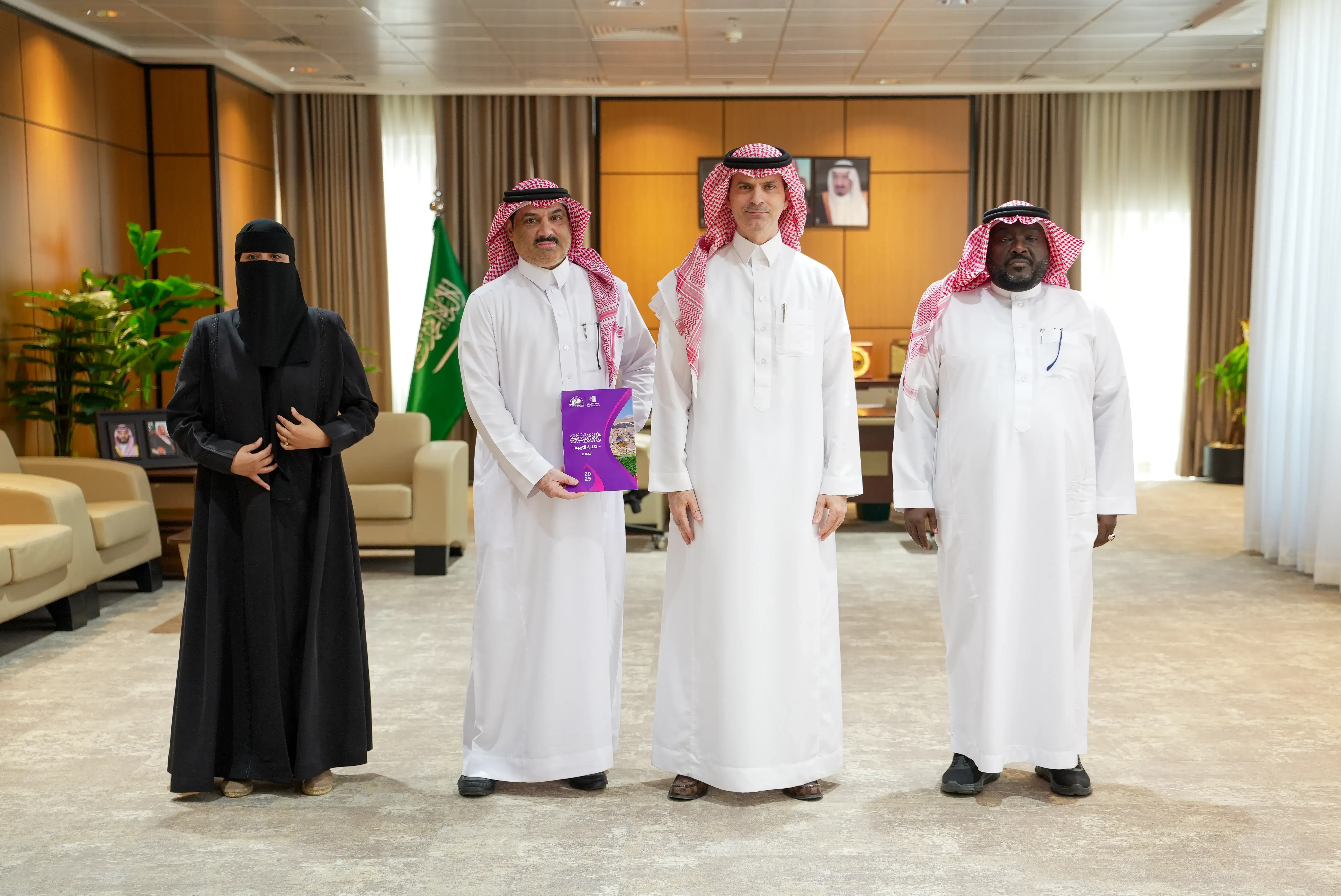
Jouf University President Reviews the College of Education’s Annual Report and Highlights Its Role in Developing National Talent and Shaping the Future of Education
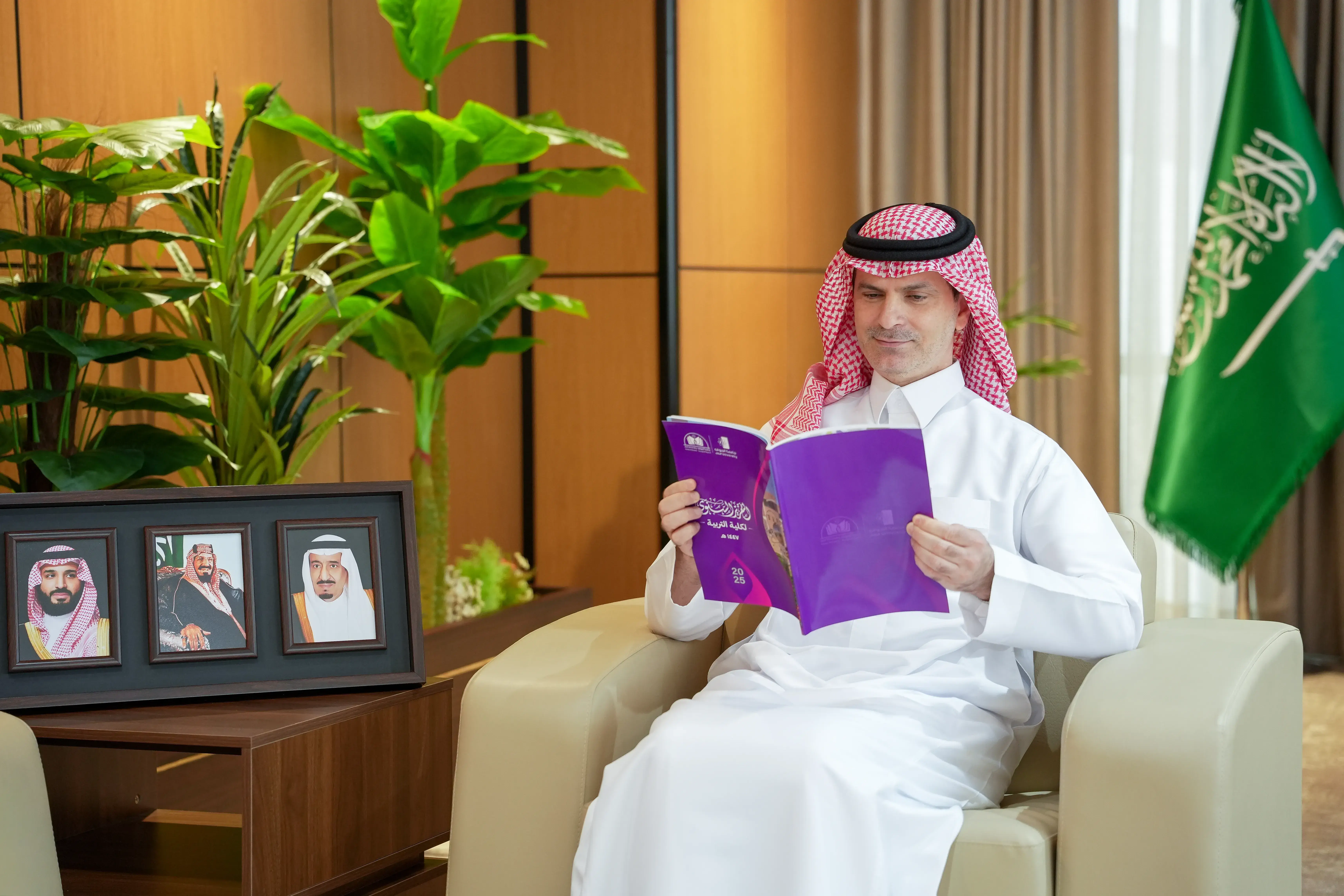
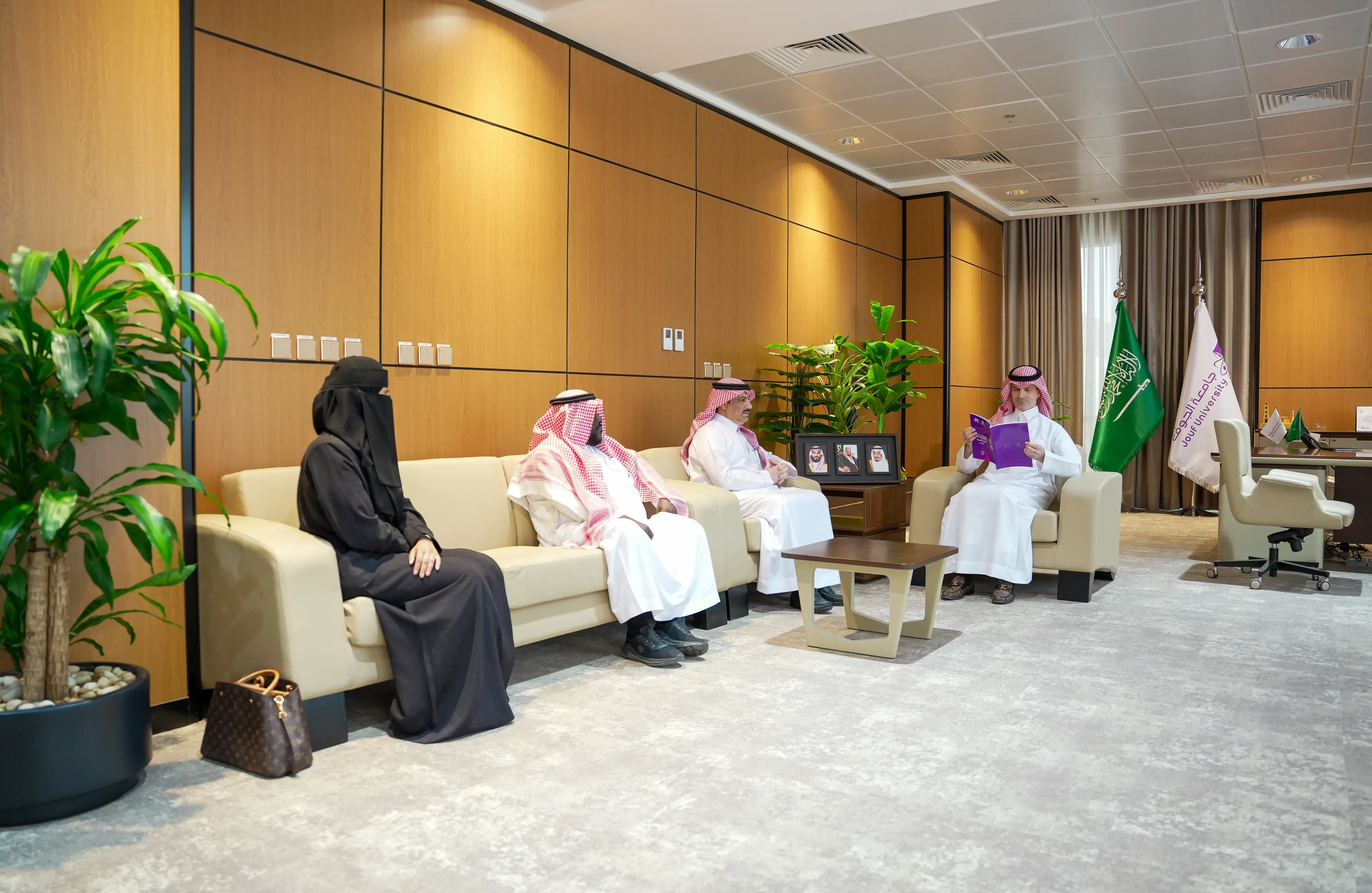
His Excellency the President of Jouf University, Prof. Mohammed bin Abdullah Al-Shaya, received the Dean and Vice Deans of the College of Education. During the meeting, they reviewed the College’s annual report for the 1447 AH academic year, which highlighted notable achievements and performance indicators across teaching and learning, quality and academic accreditation, scientific research, postgraduate studies, community service, and volunteer work, as well as the College’s future objectives and development plans.
His Excellency reviewed the College’s portfolio of academic programs, which includes a bachelor’s degree in Early Childhood Education and five master’s programs in Psychological Counseling, Special Education, Educational Leadership, Educational Technology, and Curriculum and Instruction. The meeting also addressed the College’s efforts to develop these programs and align their outcomes with the needs of the education sector and labor market.
The report highlighted the College’s achievements in quality and academic accreditation, most notably the Bachelor’s Program in Early Childhood Education receiving conditional program accreditation through 2028 and the Master’s Program in Psychological Counseling receiving full international accreditation through 2031. The College also delivered 24 workshops and technical support sessions benefiting 426 participants, strengthening program readiness and embedding a culture of quality and continuous improvement.
In scientific research and postgraduate studies, the report documented the publication of 45 peer-reviewed papers, including 15 indexed in Scopus and Web of Science. It also highlighted three papers published by postgraduate students, external funding secured for two research projects, and the organization of several academic forums, seminars, and research training programs. These efforts supported scholarly output and strengthened the role of educational research in addressing educational and societal challenges.
The report also reviewed the College’s academic, training, and community engagement activities, which included 115 specialized programs and events benefiting 2,839 participants, as well as 40 social responsibility programs serving more than 1,700 beneficiaries. In volunteering, the College provided 203 opportunities that generated 1,099 volunteer participations and 5,495 volunteer hours. It also signed five memoranda of understanding to strengthen institutional and community partnerships.
The meeting addressed the College’s efforts to support students and female graduates through 18 guidance programs and activities, support for high-achieving and gifted students, and 26 programs and workshops aimed at developing graduates’ professional readiness. The College also expanded its cooperation with employers and supporting institutions.
His Excellency emphasized that the College of Education is a key pillar in developing qualified national talent, advancing educational practices, and supporting educational research. He underscored the importance of building on the achievements made, sustaining academic accreditation, developing postgraduate programs, expanding partnerships with the education sector, and transforming educational research and initiatives into tangible impact that advances education and serves society in alignment with Saudi Vision 2030.
At the conclusion of the meeting, His Excellency commended the efforts of the College’s leadership, vice deans, faculty members, administrative staff, and students. He reaffirmed the University’s continued support for initiatives that enhance the quality and competitiveness of the College’s outcomes and consolidate its position as a leading center of educational expertise that contributes to human development and shapes the future of education.